Paid Ads vs. SEO vs. Email: Where Should Your Next Marketing Dollar Actually Go?

Your Shopify store is getting traffic. Paid campaigns are running. Email is bringing in some sales. SEO is starting to gain traction.

Then comes the harder question: where should the next chunk of your marketing budget actually go?

Putting more money into the wrong channel can leave you with more clicks, more activity, and very little extra revenue. Good marketing budget allocation for ecommerce starts with knowing which part of your growth system needs help most right now.

In this blog, you’ll learn when paid ads deserve more budget, when SEO is the smarter investment, when email should take priority, and how to decide which channel can make the biggest difference to your Shopify growth.

Speed matters when you need qualified visitors
Paid Ads Make Sense When You Need More Qualified Traffic

Paid media can be one of the fastest ways to put your products in front of the right audience.

For a Shopify brand with a proven offer, a website that converts, and reliable tracking, increasing ad spend can help you reach more customers without waiting months for another channel to build momentum.

The problem starts when brands use paid ads to compensate for issues elsewhere.

If shoppers land on weak product pages, struggle through checkout, or do not understand why they should buy, more traffic simply sends more people into the same broken experience.

Once the fundamentals are working, better audience targeting, creative testing, and budget allocation can help you scale paid acquisition more efficiently instead of simply increasing spend.

Paid media is ready for more budget when:

  • Your product pages are converting consistently.
  • Your tracking and attribution are reliable.
  • You know which products, audiences, and campaigns drive profitable orders.
  • Your creative is being tested and refreshed regularly.

The goal is to buy traffic that can turn into profitable revenue.

Build visibility that does not depend only on spend
SEO Makes Sense When Paid Traffic Is Doing Too Much of the Work

StoreHQ visual comparing paid ads, SEO, and email as three ways to allocate ecommerce marketing budget.

People think PPC is fast and SEO is slow. That is true, but not entirely.

Paid ads can generate demand as long as you continue funding them. SEO helps you build visibility that can keep bringing qualified shoppers to your store over time.

For ecommerce brands, that includes much more than publishing blog posts. Collection pages, product pages, technical SEO, internal linking, structured data, site speed, and search intent all influence how easily shoppers can find you.

When those pieces work together, organic search can become a scalable acquisition channel rather than just another source of traffic.

SEO may deserve more of the budget when:

  • Organic traffic has stopped growing.
  • Important product or collection pages have weak visibility.
  • Most new customer acquisition depends on paid campaigns.
  • Technical SEO issues are limiting rankings or discoverability.

Waiting until paid acquisition becomes too expensive is usually the wrong time to start building an organic channel.

Growth does not stop after the first purchase
Email Makes Sense When You Are Winning Customers but Not Keeping Them

Paid ads and SEO help shoppers discover your brand. Email helps you get more value from the customers and prospects you already worked to acquire.

That matters because a store can generate plenty of first-time orders and still struggle to grow.

If customers rarely return, the business has to keep replacing them with new buyers. That puts more pressure on acquisition and makes growth harder to maintain.

Email deserves closer attention when:

  • Key flows such as welcome, abandoned cart, post-purchase, or win-back are weak.
  • Repeat purchase rates are not improving.
  • Most subscribers receive the same messages.
  • Revenue depends heavily on constantly acquiring new customers.

The right investment depends on the real constraint
So, Where Should Your Next Marketing Dollar Go?

There is no single winner in a marketing channel comparison between paid ads, SEO, and email.

The best channel depends on where the customer journey is breaking down.

If you are not getting enough qualified visitors, acquisition needs attention.

If traffic is healthy but sales are weak, putting more money into traffic may make little sense until conversion improves.

If traffic is healthy but sales are still weak, it may be time to fix the storefront issues hurting conversion before spending more on acquisition. Slow pages, unclear product information, poor mobile UX, and checkout friction can all reduce the value of traffic you are already paying for.

If customers are buying but rarely returning, retention may offer a better opportunity than another acquisition campaign.

This is the simplest way to think about where to spend a marketing budget for a Shopify store: put the next dollar where it can remove the biggest constraint.

Not where competitors are spending.

Not where the latest marketing trend says you should spend.

Where your own numbers show the biggest gap.

Common questions about channel investment decisions
Frequently Asked Questions

Which marketing channel should ecommerce brands invest in first?

Start with the channel that solves your biggest current growth problem, whether that is traffic, conversion, or retention.

Is SEO better than paid ads for ecommerce?

Neither is always better; paid ads offer speed, while SEO can build more durable organic visibility over time.

How much should a Shopify store spend on paid ads?

There is no universal amount, so base spend on your margins, conversion performance, CAC, and ability to scale profitably.

When should an ecommerce brand invest more in email marketing?

Increase investment when you have customers and subscribers but weak repeat purchases, lifecycle flows, or segmentation.

Should SEO, paid ads, and email be managed separately?

They can have separate tactics, but budget decisions should consider how all three channels affect the same customer journey.

Put budget behind the biggest opportunity
Put Your Next Marketing Dollar Where It Matters Most

Paid ads, SEO, and email can all drive growth, but the right investment depends on what your store needs now. Find the biggest gap first, then put your budget behind the channel most likely to improve it.

Not sure where your next dollar should go? Start a conversation and get a clearer view of what is holding your Shopify growth back.


7 Signs Your Product Pages Aren’t AI-Shopping Ready

AI shopping is changing what your product pages need to do. They still have to convince shoppers to buy, but they also need to give search and AI platforms clear information about what you sell, who it is for, and why someone should choose it.

That is where product page optimization for AI search comes in. A product page can look great to a shopper but still leave important information unclear to AI systems. Thin descriptions, missing schema, inconsistent product data, or unanswered questions can all make your products harder to understand and discover.

In this blog, we’ll see seven signs your product pages may not be ready for AI-driven shopping.

Features alone do not tell the full product story
1. Your Product Descriptions Are Mostly Features

Materials, dimensions, ingredients, and specifications tell shoppers what a product includes. But they do not always explain why someone should buy it.

A stronger product page also answers practical questions, like: 

  • Who is the product for? 
  • What problem does it solve? 
  • When would someone use it? 
  • What makes it different from similar options?

Connecting features to real buying situations gives shoppers more useful information. It also gives AI systems more context when they are trying to match products with specific searches and questions.

Behind-the-scenes structure shapes discoverability
2. Your Product Schema Is Incomplete

Important product information should not only appear on the page. It should also be clearly structured behind the scenes.

Schema markup for Shopify products can help define details such as the product, price, availability, ratings, offers, and reviews when they apply. StoreHQ’s AI-ready Shopify development includes Product, Offer, AggregateRating, and Review schema to help search and AI systems understand product information more clearly.

If important details are missing or different from what shoppers see on the page, it can make your product information harder to interpret.

Consistency helps AI understand what you sell
3. Your Product Data Changes Across Channels

Your Shopify store may show one product title, while your product feed uses another. A retailer may have an older description. A marketplace listing may still show outdated specifications.

Those differences make your product information less consistent.

A strong structured data ecommerce setup goes beyond adding schema. Product titles, categories, prices, variants, descriptions, and specifications should stay consistent wherever possible across your store, feeds, and third-party listings.

The clearer and more consistent your product information is, the easier it becomes for different platforms to understand what you actually sell.

The best product pages answer before shoppers ask
4. You Do Not Answer Real Buyer Questions

StoreHQ visual showing buyer questions about size, shipping, price, reviews, and comparisons leading to a product page.

Shoppers rarely think only about product names.

They ask questions such as:

“Is this suitable for sensitive skin?”

“Will this fit wide feet?”

“Which option is better for travel?”

If your product page does not answer the questions people naturally ask before buying, useful context is missing.

The guide to making products discoverable in AI answers explains why buyer-focused questions, comparisons, and use cases can support AI visibility.

Trust signals influence both shoppers and AI systems
5. Reviews Are Missing or Hard to Find

Your product description tells shoppers what the brand says about the product. Reviews show what customers experienced after buying it.

That makes reviews useful for both trust and context.

Customers often mention details that the main product copy may not cover, such as fit, quality, durability, sizing, or how they actually use the product.

If reviews are limited, outdated, or difficult to find, shoppers lose an important decision-making signal. Review information should also be marked up correctly where applicable so it supports the rest of your product data.

Visibility depends on technical accessibility
6. Your Product Pages Are Difficult to Crawl

Even a well-written product page has limited value if search and AI systems struggle to access it.

Problems with indexing, internal linking, site structure, or crawler access can make important product content harder to discover. That is why AI readiness should work alongside technical SEO rather than being treated as a completely separate task.

StoreHQ’s quarterly ecommerce growth audit looks at AI discoverability alongside SEO, paid ads, email, and CRO.

You cannot improve visibility without knowing where you stand
7. You Have No Idea Whether AI Is Mentioning Your Products

The final sign is simple: you are making changes without knowing whether they are improving visibility.

ChatGPT product recommendations, Gemini, Perplexity, Google AI experiences, and other AI tools are becoming another place where shoppers can research and compare products.

You do not need to track every possible question someone could ask. Start with the queries that matter most to your products.

Look at whether your brand appears, which competitors are being recommended, and which sources AI tools rely on when discussing products in your category. That gives you a clearer idea of where your visibility gaps may be.

Few common questions, answered
FAQs

What is product page optimization for AI search?

It means making your product information clear, structured, useful, and easy for both shoppers and AI systems to understand.

Does Shopify automatically add product schema?

Shopify themes may include basic structured data, but brands should still check that important product, offer, review, and availability information is complete and accurate.

Can better product descriptions improve AI shopping visibility?

Clear descriptions that explain features, use cases, differences, and buyer questions can give AI systems more useful context about your products.

Are reviews important for AI shopping assistant visibility?

Reviews add useful customer context and trust signals that can strengthen the information available about your products.

How can I tell if my products appear in AI recommendations?

Test relevant buying questions across major AI platforms and track how often your brand appears, which products are mentioned, and which sources are cited.

Build product pages ready for the next shopping experience
Make Your Product Pages Easier to Find and Buy From

Getting your store ready for AI shopping does not mean rewriting every page for a machine.

Start with what also makes the experience better for your customers: clear descriptions, complete product data, useful reviews, direct answers to common questions, accurate schema, and fewer technical barriers.

Focus first on the product pages that already drive the most traffic or revenue. Check whether the information is complete, whether your schema matches what is on the page, and whether shoppers can quickly find the answers they need.

Get a growth audit with StoreHQ to find the product-page and AI visibility gaps that may be limiting your ecommerce growth.

7 Revenue Leaks We Find in Almost Every Ecommerce Audit

Launching an ecommerce store is only half the battle. The real challenge is making every visitor count. Many brands invest heavily in paid ads, SEO, email marketing, and social media, yet still struggle to grow revenue because their websites quietly leak sales at every stage of the customer journey.

These revenue leaks are rarely caused by a single major issue. Instead, they’re usually a collection of small problems that add friction, reduce trust, or make it harder for shoppers to complete a purchase. Over time, these missed opportunities can cost thousands of dollars in lost revenue every month.

An ecommerce website audit helps uncover these hidden issues before they become expensive problems. From homepage messaging to checkout optimization, every page plays a role in how effectively your store converts visitors into customers.

Here are seven of the most common revenue leaks we uncover during ecommerce conversion audits, and how you can fix them.

The hidden cost of a slow storefront
Slow Website Performance

Every additional second your website takes to load increases the likelihood that visitors will leave before browsing your products. Speed affects user experience, search rankings, and ultimately your revenue.

Common performance issues include oversized images, unused Shopify apps, excessive JavaScript, and poorly optimized themes.

How to fix it

  • Compress and properly size images.
  • Remove unused apps and third-party scripts.
  • Optimize Core Web Vitals.
  • Enable lazy loading.
  • Regularly monitor page speed using tools like PageSpeed Insights.

A faster website keeps shoppers engaged and increases the chances they’ll reach checkout.

Where buying decisions are won or lost
Product Pages That Don’t Build Confidence

Your product detail page is where purchase decisions happen. If it lacks essential information or trust signals, shoppers often abandon the buying process to compare competitors instead.

Many stores rely on short descriptions and attractive photos while overlooking the information customers actually need.

What strong product pages include

  • Detailed product descriptions
  • High-quality images and videos
  • Customer reviews
  • Clear pricing and shipping details
  • FAQs
  • Return policies
  • Trust badges
  • Strong calls-to-action

An optimized product page removes hesitation and makes purchasing feel effortless.

Clarity is the first conversion signal
Weak Homepage Messaging

Visitors decide within seconds whether they’ve landed on the right website. If your homepage doesn’t immediately explain what you sell and why customers should choose you, many users leave without exploring further.

Common issues include vague headlines, cluttered layouts, and buried value propositions.

Improve your homepage by

  • Writing a clear hero headline.
  • Highlighting your unique selling proposition.
  • Featuring bestselling products.
  • Displaying customer reviews.
  • Making navigation simple and intuitive.

The homepage should guide visitors toward shopping, not force them to figure out what your business offers.

The shopping experience has to work everywhere
Poor Mobile Shopping Experience

For many ecommerce brands, mobile devices generate the majority of traffic. Yet mobile shoppers frequently experience slower pages, confusing navigation, and frustrating checkout processes.

Even small usability issues can dramatically reduce conversions.

Review your mobile experience

  • Test navigation on multiple devices.
  • Simplify menus.
  • Increase button sizes.
  • Improve page loading speed.
  • Reduce unnecessary form fields.
  • Make checkout mobile-friendly.

Designing for mobile first often improves the experience across every device.

Removing friction at the moment that matters
Checkout Friction

Alt text: Infographic showing ecommerce checkout friction with a leaking funnel, checkout page, cart, and payment issue icons.

You’ve already paid to acquire the visitor. Losing them during checkout is one of the most expensive revenue leaks.

Unexpected shipping costs, mandatory account creation, lengthy forms, or limited payment options can all increase cart abandonment.

Reduce checkout abandonment by

  • Offering guest checkout.
  • Displaying shipping costs upfront.
  • Supporting multiple payment methods.
  • Minimizing form fields.
  • Showing trust and security badges.
  • Providing progress indicators during checkout.

The fewer obstacles customers encounter, the more likely they are to complete their purchase.

The revenue opportunities hiding after the first click
Missed Upsell and Cross-Sell Opportunities

Many stores focus entirely on generating more traffic while overlooking one of the easiest ways to increase revenue: raising average order value.

Strategic upsells and cross-sells encourage customers to purchase complementary products without feeling overly promotional.

Examples include:

  • Frequently bought together products
  • Bundle offers
  • Product recommendations
  • Volume discounts
  • Cart add-ons
  • Post-purchase offers

Increasing average order value often delivers faster revenue growth than acquiring additional visitors.

Better decisions start with better visibility
Missing Data and Conversion Tracking

You can’t fix what you don’t measure.

Many ecommerce stores have incomplete analytics, missing event tracking, or inaccurate attribution, making it impossible to understand where customers drop off.

Without reliable data, optimization becomes guesswork.

Every ecommerce website audit should verify

  • Google Analytics 4 configuration
  • Shopify conversion tracking
  • Google Ads and Meta Pixel events
  • Add-to-cart tracking
  • Checkout funnel reporting
  • Revenue attribution
  • Heatmaps and session recordings

Accurate tracking helps prioritize improvements based on real customer behavior instead of assumptions.

Understanding what is holding growth back
Why an Ecommerce Website Audit Matters

Many ecommerce stores don’t just have a traffic problem, they also have a conversion problem.

An ecommerce website audit uncovers the hidden issues preventing visitors from becoming customers. By reviewing your site’s performance, user experience, product pages, checkout flow, and analytics, you can identify the biggest ecommerce growth opportunities and focus your efforts where they’ll have the greatest impact.

Even small improvements in conversion rate, average order value, or checkout completion can generate significant revenue without increasing your marketing budget.

Turn hidden losses into growth opportunities
It’s Time to Plug the Revenue Leaks

Revenue leaks rarely come from one major flaw. They’re usually the result of dozens of small friction points scattered throughout the shopping journey.

Every missed conversion is a missed opportunity for growth. At StoreHQ, we conduct comprehensive ecommerce website audits to uncover the hidden issues affecting your traffic, conversions, and revenue. From site speed and user experience to product pages, checkout flow, and technical SEO, we identify the biggest opportunities to help your Shopify store perform at its best.

Book your free Ecommerce Website Audit today and discover the changes that can turn more visitors into customers.

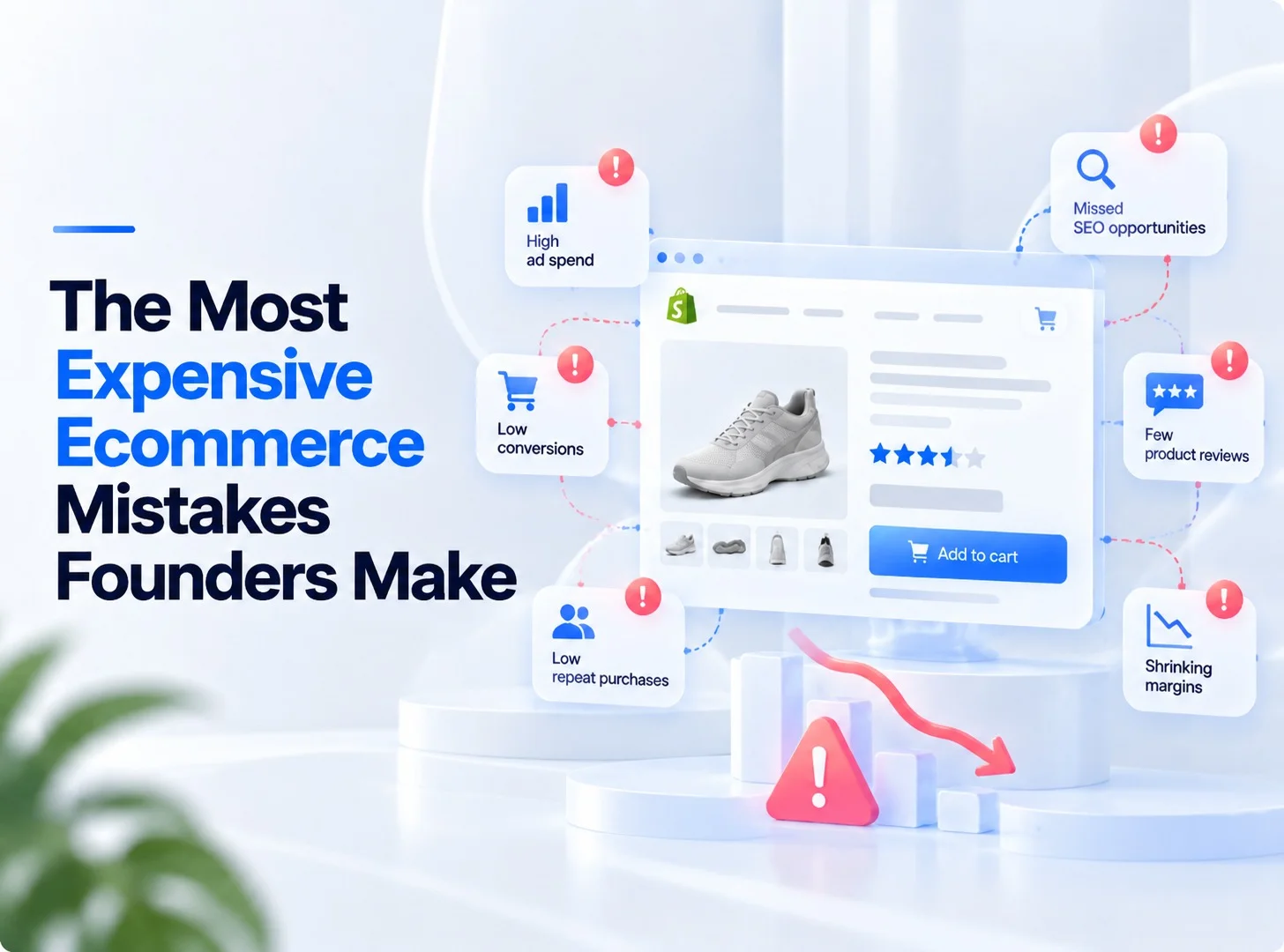
The Most Expensive Ecommerce Mistakes Founders Make

Most ecommerce stores don’t fail because of a bad product. They fail because of bad decisions made at the wrong time, often with good intentions. The mistakes that drain revenue fastest aren’t always visible at the moment. They show up later, in rising customer acquisition costs, shrinking margins, and stalled growth despite real effort.

This blog covers the high-stakes errors that consistently hurt ecommerce founders and what each one actually costs.

More spend cannot fix a weak conversion path
Scaling Paid Ads Before Fixing Conversions

Pouring more budget into paid ads before the store converts is one of the fastest ways to burn cash. If the product page is weak, the checkout process has friction, or the offer isn’t clear, then no campaign structure will fix the underlying problem. ROAS suffers not because the targeting is off, but because the destination isn’t doing its job.

CRO isn’t something you revisit after scaling. It’s a prerequisite. Moving the conversion rate from 1.5% to 2.5% on existing traffic changes the economics of every campaign running against the store. Founders who treat optimization as an afterthought pay for it directly in wasted budget and inflated acquisition costs. These are classic ecommerce scaling mistakes that show up fast once spend increases.

The hidden cost of chasing only new customers
Ignoring Retention While Obsessing Over Acquisition

When CAC keeps climbing and the repeat purchase rate stays flat, the business is working harder than it needs to. Acquiring a new customer costs significantly more than selling to an existing one, yet many ecommerce brands have no structured retention strategy beyond a generic newsletter.

The lifecycle flows that drive the most revenue, abandoned cart sequences, post-purchase series, and win-back campaigns, are often missing entirely or set up once and never touched again. That’s money sitting idle. Ignoring retention while chasing new customers is one of the most common ecommerce growth mistakes, and it compounds quietly until CAC becomes unsustainable.

Building growth on rented traffic has limits
Treating SEO as Optional

Over-reliance on paid channels without an organic foundation is an expensive long-term position. Every sale driven purely by ads requires ongoing spend. SEO builds an asset that keeps delivering without a cost per click attached to every visit.

The most common SEO gaps in ecommerce are category pages with thin copy, product descriptions that duplicate manufacturer copy, missing schema markup, and a lack of an internal linking strategy. None of these are complex fixes, but they are constantly deprioritized. Starting SEO late is one of the more avoidable ecommerce marketing mistakes because the compounding nature of search visibility means every month of delay extends how long you’ll keep paying for traffic.

Guesswork is one of the most expensive decisions
Skipping the Data Before Making Big Decisions

Scaling what feels right, rather than what the numbers show, is a pattern that costs ecommerce brands at every stage. Without clear visibility into channel performance, attribution, and product-level margin, budget allocation becomes guesswork. The result is spending more on channels that look productive on the surface but leak margin underneath.

Poor analytics doesn’t just waste budget. It delays pivots that could have entirely changed the business trajectory. Real-time tracking and proper attribution aren’t luxuries for common ecommerce challenges. They’re the difference between decisions that compound and decisions that quietly erode the business. 

This is one of the ecommerce founder mistakes that’s easiest to avoid once the right setup is in place. StoreHQ helps ecommerce founders connect performance data across SEO, paid ads, reviews, retention, and conversion paths so they can see which mistakes are actually costing revenue before they scale the wrong thing. 

A poor experience impacts more than one sale
Underestimating the Cost of a Poor Customer Experience

Slow site speed, confusing navigation, and checkout friction don’t just reduce conversion rate. They reduce LTV because a customer who had a poor first experience rarely comes back. No guest checkout option, limited payment methods, and unclear shipping information are friction points that show up directly as abandoned carts and one-time buyers.

One bad experience hits immediate revenue and long-term review scores at the same time. Customers who leave frustrated don’t write glowing reviews, and negative sentiment on product pages is visible to every future visitor. The cost isn’t just the lost sale. It’s the downstream damage to trust, which is one of the worst ecommerce founder mistakes to recover from.

Trust can decide whether shoppers convert
Neglecting Social Proof and Reviews

Low review volume on high-traffic product pages is a conversion problem, not just a reputation problem. Shoppers use reviews as a decision signal, and a page with few or no reviews creates doubt regardless of how strong the product copy is.

Without a system to generate, manage, and respond to reviews, this gap won’t close on its own. Review generation needs to be a deliberate process built into the post-purchase flow. Responding to reviews, positive and negative, signals credibility to future buyers and affects how platforms surface your products. Treating trust signals as passive reputation management is one of the more common ecommerce growth mistakes, leaving measurable revenue on the table.

Book a demo to find the ecommerce mistakes costing your brand revenue, margin, and repeat customers. 

Answering some common questions
Frequently Asked Questions

What is the most common ecommerce mistake new founders make?

Scaling paid ads before the store is optimized for conversion. Traffic without a converting site burns budget fast.

Why do ecommerce stores with high traffic still struggle to grow?

Usually a retention or CRO problem. Visitors aren’t converting, and buyers aren’t coming back. Both issues compound over time.

When should an ecommerce brand invest in SEO?

From day one, ideally. Category pages and product descriptions should be optimized early. SEO takes time to compound, so starting late means paying for traffic longer.

How do I know if my ecommerce marketing mistakes are hurting revenue?

Rising CAC, flat repeat purchase rate, and low ROAS are the clearest signals. A proper attribution setup makes these patterns visible before they become expensive.

Smarter systems create sustainable growth
Fix the Ecommerce Mistakes That Quietly Drain Growth 

These mistakes are common because they’re easy to deprioritize when the business is moving fast. The fix isn’t doing more across every channel at once. It’s building smarter systems across SEO, CRO, retention, and analytics so each part of the business supports the others.

Get a growth audit with StoreHQ to uncover the ecommerce mistakes costing your brand revenue, margin, and repeat customers. 

How To Tell If Your Store Has a Traffic, Conversion, or Retention Problem

Many e-commerce brands assume the answer is always more traffic. If sales are slow, the instinct is to spend more on ads, launch more campaigns, or chase more reach. But growth problems are not always acquisition problems. Sometimes the store is getting enough visitors and failing to convert them. Sometimes it is converting well but not bringing buyers back. That is why the first step in ecommerce growth is not scaling. It is a diagnosis.

The fastest way to find the real bottleneck is to look at the full customer journey. A store can have strong traffic and still underperform because product pages are weak. It can have solid conversion and still stall because repeat purchases are too low. A simple ecommerce funnel analysis helps you see where the leak is before you spend more money trying to fill it.

The problem is not always where you think it is
Why Ecommerce Growth Problems Are Often Misdiagnosed

A lot of brands misread the symptom as the problem. When revenue slows down, traffic becomes the obvious culprit because it is the easiest metric to watch. Sessions are visible. Ads are visible. Campaigns are visible. But visibility does not mean effectiveness.

This is where brands often waste budget. They increase spend before they understand where customers are dropping off. They add more media, more email sends, or more content without knowing whether the issue is awareness, consideration, or retention. The result is more activity but not necessarily more growth.

The better approach is to diagnose first and scale second. A quarterly growth audit helps identify the bottleneck, then decide which lever matters most. That is usually a better use of time than guessing which channel needs more fuel. It also keeps teams from solving the wrong problem at the wrong stage.

Knowing what is broken changes what you fix
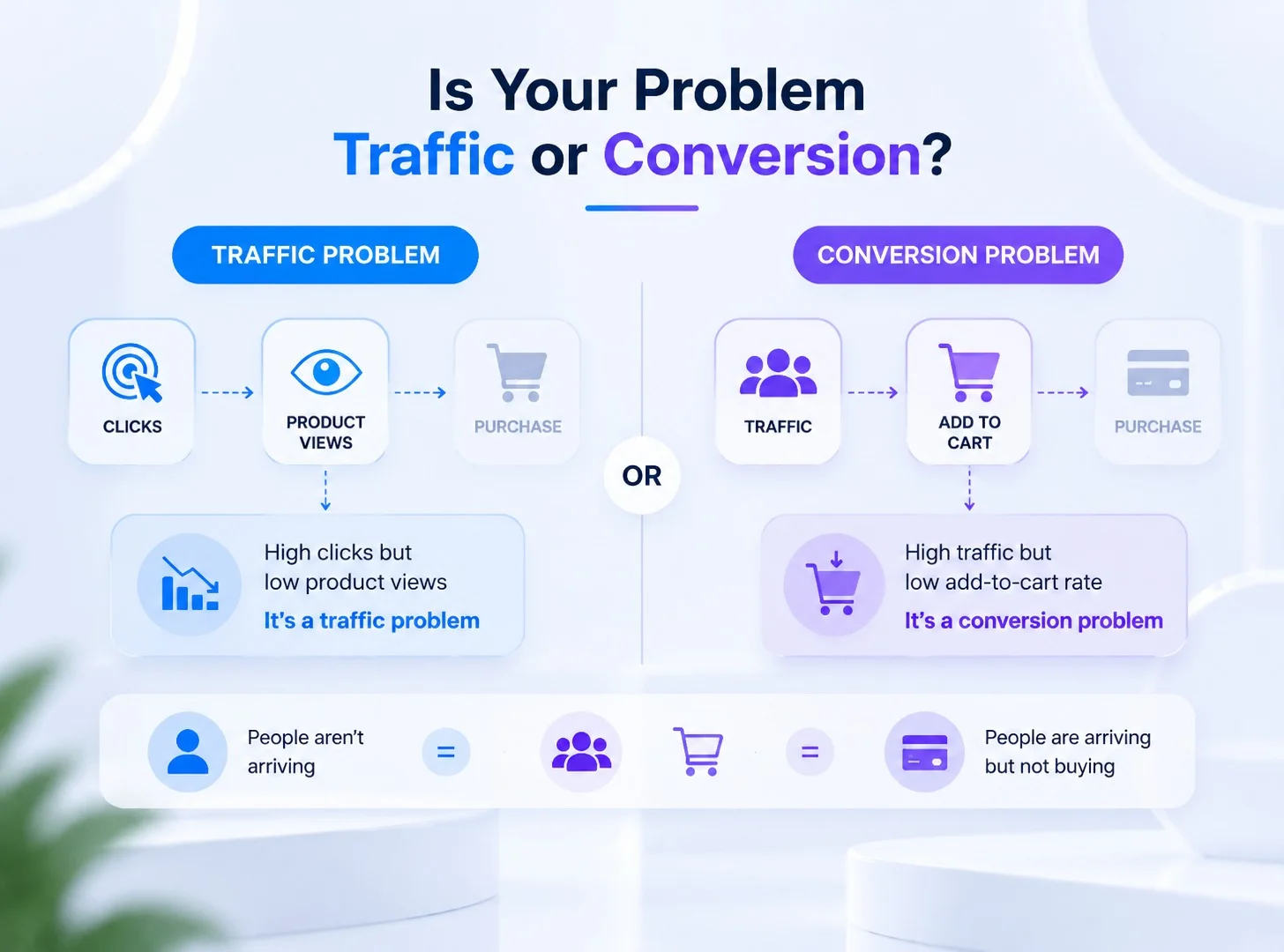
Is Your Problem Traffic or Conversion?

Infographic comparing ecommerce traffic and conversion problems with simple customer journey icons and decision flow.

The clearest way to think about ecommerce traffic vs conversion is to ask whether people are not arriving, or arriving and not buying. Traffic issues happen before qualified visitors reach the store, while conversion issues happen after they land.

A traffic problem usually means low sessions, weak reach, or poor audience fit. A conversion problem means people visit product pages but still do not buy, often because of unclear value, weak trust, or friction in the purchase path.

Here’s a simple test , if clicks are high but product views are low, it is usually traffic. If traffic is strong but add-to-cart rates are weak, it is usually conversion.

Finding the exact point where shoppers drop off
How To Identify Conversion Rate Problems

Conversion rate issues usually become obvious once shoppers start interacting with your store. Common signs include:

  • Low add-to-cart rates despite healthy product page traffic.
  • Unclear product pages that don’t answer key customer questions or communicate value effectively.
  • Confusing pricing or shipping costs that reduce purchase intent.
  • Checkout friction, such as mandatory account creation, lengthy forms, or limited payment options.
  • Poor mobile experience, including difficult navigation, slow load times, or hard-to-use checkout flows.
  • High cart or checkout abandonment, indicating trust or usability issues.
  • Weak trust signals, such as missing reviews, guarantees, return policies, or security badges.
  • Paid campaigns with low conversion rates, where traffic arrives but fails to generate sales.
  • Creative fatigue in ads, shown by declining CTR, rising CPMs, and lower engagement.

Tip: Follow the customer journey from product view → add to cart → checkout → purchase. The stage with the biggest drop-off usually reveals where your conversion problem lies.

Acquiring customers is only one part of growth
Why Retention Problems Can Limit Ecommerce Growth

Retention is often the most underestimated part of ecommerce growth. A store can win the first sale and still struggle if customers never come back.

If repeat purchases are weak, the business has to keep replacing lost buyers, which puts more pressure on paid channels and acquisition efficiency. Over time, that makes growth more expensive and less stable.

That is why customer lifetime value matters so much. A store with strong retention grows more efficiently because each customer is worth more over time. Retention issues usually show up when first-time buyers convert but do not become repeat buyers, often because the post-purchase experience or follow-up is too weak.

Building a system that brings customers back
Building A Strong Ecommerce Retention Strategy

An effective retention strategy focuses on delivering relevant, timely experiences that encourage customers to return. Key elements include:

  • Personalized email and SMS campaigns based on customer behavior and purchase history.
  • Welcome flows that introduce your brand and set clear expectations.
  • Post-purchase sequences that build confidence, provide support, and encourage repeat purchases.
  • Replenishment reminders for products customers are likely to reorder.
  • Reactivation campaigns to win back inactive customers with relevant offers or content.
  • Customer segmentation based on purchase frequency, product type, and shopping behavior.
  • Simple, valuable loyalty programs that reward repeat purchases without unnecessary complexity.
  • Product education and helpful content that keeps customers engaged after their first order.
  • Consistent post-purchase experience, including excellent service, timely communication, and ongoing value.

A successful retention strategy keeps customers engaged long after their first purchase, increasing customer lifetime value and reducing reliance on constant customer acquisition.

Match your strategy to your biggest constraint
How To Decide What Your Store Actually Needs

The decision becomes easier when you look at the pattern of the business instead of a single metric. If you have very low traffic, the problem is likely acquisition. If you have traffic but weak sales, the problem is likely conversion. If you have sales but poor repeat purchase behavior, the problem is likely retention.

This is where the right growth approach matters. Broader guidance can help, but only after you know which part of the funnel needs attention first. A store that lacks traffic should not spend its energy on checkout optimization alone. A store with plenty of visitors but weak sales should not keep buying more traffic before fixing the product experience. A store with repeat buyers but weak acquisition may need stronger discovery and visibility.

The point is to match the fix to the bottleneck. That is what makes ecommerce conversion rate optimization effective in practice. It is not just about improving the rate. It is about improving the part of the journey that is limiting the store’s growth right now.

A simple rule helps. If visitors are coming but not buying, focus on conversion. If buyers are coming back too rarely, focus on retention. If people are not arriving at all, focus on traffic. Once that diagnosis is clear, every next decision gets easier.

Fix the bottleneck before scaling further
Conclusion

Most stores do not have a single growth problem. They have one dominant bottleneck that keeps showing up first. Some stores need more traffic. Some need stronger conversion. Others need a better retention system. The job is not to guess. The job is to identify where the leak is and fix that stage before adding more pressure to the rest of the funnel.

That is why ecommerce funnel analysis should sit at the center of your decision-making. It helps you see whether the issue is traffic, conversion, or retention, and it keeps you from overspending on the wrong lever. More advanced perspectives on quarterly growth audits reinforce the same idea: diagnose cleanly, then scale with intent. When you do that, ecommerce conversion rate optimization becomes a growth system, not just a tactic.

Ready to scale smarter? Get a growth audit with StoreHQ and turn your optimization process into a consistent competitive advantage.

The Ecommerce Growth Audit Every Brand Should Run Quarterly

Most ecommerce brands only audit their store when something breaks. By then, the damage is already done. Revenue has leaked, CAC has crept up, and the conversion rate has quietly slipped. A quarterly ecommerce growth audit flips that dynamic: instead of reacting, you catch problems early and find growth levers before your competitors do. Skipping regular audits means flying blind on which channels are underperforming, where the funnel is losing buyers, and which fixes would have the fastest payoff.

In this blog, we cover what a quarterly ecommerce growth audit looks like across every major channel, why growth opportunities often go unnoticed without a structured audit, and how to turn findings into a sequenced growth roadmap that actually moves revenue.

Growth problems rarely exist in one channel
What a Quarterly Ecommerce Audit Actually Covers

A proper ecommerce growth audit spans SEO, paid ads, email marketing, CRO, and AI discoverability, not one channel at a time. Reviewing channels in isolation often misses the issues that have the biggest impact on revenue, such as paid traffic landing on low-converting pages or email campaigns targeting the wrong audience.

By evaluating the entire customer journey, brands gain a clearer understanding of what is driving growth and what is holding it back. A quarterly audit helps uncover missed opportunities, identify revenue leaks, and prioritize the highest-impact improvements. The result is a focused roadmap that aligns marketing efforts with measurable business growth.

#1 SEO and Organic Visibility Check

Category and product pages hold most of your e-commerce SEO value, and those are the areas where the most gaps appear. A thorough ecommerce website audit reveals weak titles and meta descriptions, schema markup errors, indexing and crawlability issues, page speed problems, etc., that suppress rankings without obvious warning signs. 

Internal linking deserves close attention as well. Weak connections between category and product pages leave valuable ranking opportunities untapped and limit the flow of authority across the site. Keyword tracking should focus on high-intent, bottom-of-funnel searches where customers are ready to buy, rather than chasing search volume alone. Yet this is often one of the most overlooked parts of an ecommerce SEO audit.

#2 Paid Ads Performance Review

ROAS (Return on Ad Spend) trends across Meta, Google, and other paid channels reveal which campaigns are generating profitable growth and which are consuming budget without delivering meaningful returns. Beyond headline metrics, an ecommerce performance audit should also identify signs of creative fatigue before performance begins to decline. Falling click-through rates (CTR), rising CPMs, increasing frequency, and declining engagement are all early indicators that ad creatives need to be refreshed to maintain efficiency and scale.

Budget allocation between acquisition and retargeting deserves careful review each quarter, and campaign structure should be evaluated just as closely. Strategies that performed well six months ago may no longer align with your audience, competitive landscape, or profit margins. Without a deliberate audit, underperforming campaigns can continue consuming budget long after their effectiveness has declined.

#3 Email and Retention Audit

Retention is where sustainable ecommerce growth is built, and email marketing remains one of the most effective channels for driving it. The real question is whether your email program is generating repeat purchases and increasing customer lifetime value, or simply adding to send volume. Repeat purchase rate and LTV trends by cohort reveal whether retention is improving or quietly eroding over time. Segmentation gaps and list health metrics provide important context, while the share of revenue generated from email versus paid channels is one of the clearest indicators of how dependent your brand is on costly customer acquisition to sustain growth.

#4 Conversion Rate and On-Site Experience

Funnel drop-off analysis should cover three points: the product detail page, the cart, and checkout. Each stage loses buyers for different reasons, and the fixes are rarely the same across them. Mobile vs desktop conversion gaps are common and often significant, as many brands optimize for desktop while mobile drives the majority of sessions. Social proof placement and review visibility affect purchase confidence directly, and site speed problems at checkout, like too many steps, unclear shipping costs, and limited payment options, are consistent revenue drains that surface fast in any honest ecommerce website audit.

#5 AI Discoverability and Brand Presence in LLM Search

AI-generated answers in tools like ChatGPT, Perplexity, Gemini, and Google AI Overviews are becoming a key part of the customer journey, making AI visibility an important component of any ecommerce audit. Using Cite AI, brands can track how often they appear in AI-generated answers, measure share of voice against competitors, identify the prompts driving visibility, and analyze the sources being cited. This helps uncover gaps in content, product data, and brand authority that may be limiting discoverability. Combined with citation analysis and review sentiment tracking, it provides a clearer picture of how AI platforms perceive and recommend your brand.

Prioritize what moves revenue forward
How to Turn Audit Findings Into a Growth Roadmap

The goal is to create a sequenced roadmap that balances quick improvements with larger initiatives that unlock meaningful revenue growth. Rather than fixing everything at once, focus on the changes most likely to improve traffic quality, conversion rates, retention, and overall profitability. A quarterly audit becomes far more valuable when it ends with a clear set of priorities, defined ownership, and measurable growth targets for the next quarter.

If you’re unsure which findings deserve immediate attention, how to prioritize them, or what actions will have the greatest impact on revenue, an experienced growth partner can help. At StoreHQ, we help ecommerce brands turn audit findings into actionable growth roadmaps backed by SEO, CRO, paid media, retention, and AI visibility expertise. Book a demo to see where your biggest growth opportunities lie.

Everything brands ask about growth audits
Frequently Asked Questions

1. How often should an ecommerce brand perform a growth audit?

Most ecommerce brands should conduct a comprehensive growth audit every quarter. Quarterly reviews help identify performance issues early, uncover new growth opportunities, and ensure channels like SEO, paid ads, email marketing, CRO, and AI visibility remain aligned with business goals.

2. How can StoreHQ help with an ecommerce growth audit?

StoreHQ conducts channel-by-channel audits across SEO, paid media, email marketing, CRO, and AI visibility to identify growth bottlenecks and missed opportunities. The result is a prioritized roadmap focused on increasing traffic, conversions, retention, and revenue.

3. What are the biggest signs that an ecommerce store needs an audit?

Declining conversion rates, rising customer acquisition costs, stagnant organic traffic, lower repeat purchase rates, and inconsistent revenue growth are all indicators that an audit may be needed. Regular audits help uncover the root causes before they become larger problems.

4. Does StoreHQ provide recommendations or implement the fixes as well?

Yes. Beyond identifying issues, StoreHQ helps brands prioritize opportunities and execute improvements across SEO, paid ads, email marketing, CRO, and AI discoverability. This ensures audit findings translate into measurable business outcomes rather than sitting in a report.

Make optimization a repeatable growth process
Turn Quarterly Audits Into a Smarter Ecommerce Growth 

A quarterly ecommerce growth audit is how high-performing brands stay ahead of decay and build on their gains over time. Brands that grow consistently aren’t the ones with the biggest budgets. They’re the ones who know exactly where their system is leaking and fix it before it costs them. Running this cadence every quarter turns structured optimization into a habit, and that compounds significantly across channels and across the year.

Get a growth audit with StoreHQ and get a clear picture of where your ecommerce system is leaving revenue on the table.

How to Make Your Products Discoverable in AI Answers

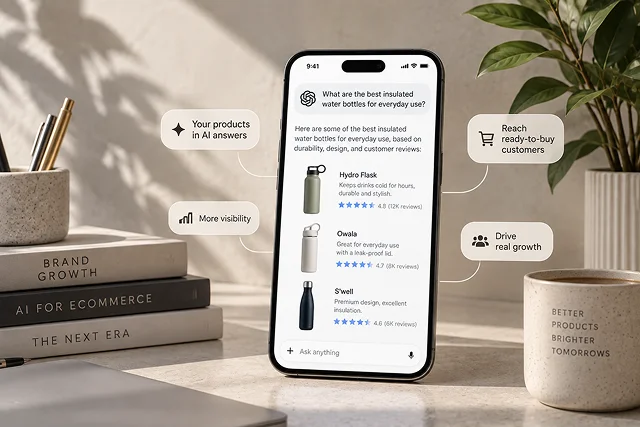
Shoppers are no longer just typing keywords into Google. They’re asking ChatGPT which protein powder to buy, asking Perplexity which running shoes fit wide feet, and asking Gemini to suggest a skincare routine under $100. These AI tools pull answers from structured, authoritative product content, not from whoever holds the top ranking. For ecommerce brands, visibility now depends on how well your product data is organized, how much trust your brand has built off-site, and whether AI models can read your content with enough confidence to cite it.

In this blog, we’ll explain how ecommerce brands can make their products more discoverable in AI answers by improving product data, agentic title and description, schema markup, reviews, off-site trust signals, and buyer-focused content. 

Product discovery is moving beyond traditional search
Why AI Search Is Changing How Products Get Found

Traditional search asks shoppers to choose between links. AI search often makes recommendations for them. When someone asks “what’s the best blender for smoothies under $150,” they want a name, a reason, and a source worth trusting. AI models look at products that frequently appear in reliable, well-structured content across the web. Brands absent from those answers lose purchase intent at the exact moment it peaks, and that revenue risk compounds as AI search adoption grows.

AI search also changes what it means to be visible online. Ranking on the first page is no longer enough if AI platforms aren’t mentioning your brand in their responses. Visibility now depends on how well your products, content, reviews, and brand signals are understood and trusted across the web. Brands that consistently appear in AI-generated recommendations gain exposure much earlier in the buying journey, while those that don’t risk becoming invisible even if they rank well in traditional search results.

AI recommendations depend on more than keywords
How AI Models Actually Decide What to Recommend

AI models don’t recommend products based solely on keywords. They evaluate how well a product aligns with user intent by analyzing product content, reviews, brand mentions, third-party references, and other trust signals across the web. As AI-powered search becomes more agentic, models are increasingly expected to compare options, evaluate fit, and recommend products on behalf of users rather than simply retrieve information. This makes agentic titles and descriptions increasingly important, as they help AI systems quickly understand a product’s purpose, target audience, key benefits, and ideal use cases.

The difference between feature-focused content and use-case-focused content matters here. A product page that only lists specifications gives AI limited context, while one that explains who the product is for, what problems it solves, and when it should be used provides stronger signals for recommendation. 

Make your product information easier for AI to understand
Structure Your Product Data So AI Can Read It

Product pages built for AI discoverability need complete, accurate attributes: clear titles, descriptive categories, and copy written around buyer use cases rather than spec lists. Schema markup for products, reviews, and FAQs signals to AI models what each page contains and how it connects to buyer queries. FAQ sections on product and category pages carry particular value because they mirror the conversational format AI answers are built from. If your product page answers “who is this for,” “what problem does it solve,” and “how does it compare to alternatives,” you’re giving AI models the structured signals they need to surface your product in relevant answers.

Trust signals extend beyond your own website
Build the Off-Site Signals AI Models Trust

Your product page alone is rarely enough to earn visibility in AI-generated recommendations. AI models look beyond your website to evaluate whether a product is credible, trusted, and widely recognized. Product reviews across retailer websites, marketplaces, and Google Shopping help validate customer satisfaction, while mentions in buying guides, comparison articles, press coverage, and editorial roundups strengthen authority signals. Consistency matters as well. When product names, descriptions, specifications, and positioning align across channels, AI systems can understand and trust the information more confidently. Brands with strong third-party validation and consistent product data are far more likely to be surfaced in AI-generated answers than those relying solely on their own website content.

Answer-focused content earns more visibility
Content Formats That Get Pulled Into AI Answers

AI models favor content that answers questions directly in a clean, structured format. Q&A sections on product pages, comparison content framed with “best for” language, and concise answers to common buyer questions all match the format AI uses to build its responses. A product page with a section answering “Is this suitable for sensitive skin?” or “How does this differ from the standard model?” is far more likely to be cited in an AI answer than a page that only describes the product in unbroken paragraphs. Writing for AI discoverability and writing for human buyers point in the same direction.

The gaps keeping products invisible
Where Most Ecommerce Brands Fall Short

The most common gaps include thin product descriptions that fail to differentiate the product, incomplete schema markup, and limited visibility across third-party sources that AI models frequently reference. Platforms such as Reddit, product review sites, retailer reviews, buying guides, comparison articles, industry publications, and editorial roundups often play an important role in shaping how AI systems evaluate products and brands. AI models don’t rely solely on what a brand says about itself, they look for supporting signals across the broader web to determine credibility, relevance, and trustworthiness.

Consistency matters as well. Product names, descriptions, specifications, and positioning should align across your website, marketplaces, retailer listings, and other external sources. Conflicting information can reduce confidence and make it harder for AI systems to accurately understand and recommend a product. Without strong third-party validation and a consistent digital footprint, even products that perform well in traditional search can struggle to gain visibility in AI-generated recommendations.

Common questions about AI product discovery
Frequently Asked Questions

Does AI search replace Google for product discovery?

Not entirely, but it’s becoming a meaningful channel as many shoppers use AI tools alongside traditional search, and some go straight to AI for recommendations, especially for higher-consideration purchases.

What schema markup matters most for product pages?

Product schema, Review schema, and FAQ schema are the most relevant. They help AI models identify what a page is about, what buyers think of it, and what questions it answers.

How do reviews affect AI product recommendations?

Reviews act as third-party validation. AI models treat high-volume, consistent reviews across platforms as a trust signal, making those products more likely to appear in recommendations.

Can smaller ecommerce brands compete in AI search?

Yes. AI models prioritize relevance and structure, not brand size. A smaller brand with well-structured product data, strong reviews, and specific use-case content can outperform larger brands running generic pages.

Build visibility before the buying decision happens
Build Product Visibility with StoreHQ

AI discoverability builds over time. Brands that structure their product data, invest in reviews, and build off-site authority now create an edge that gets harder for competitors to close. The practical starting point is a straightforward audit: how complete is your product data, how much schema coverage do you actually have, and where does your brand appear when AI tools look for third-party validation.

Get a growth audit with StoreHQ, and improve your product data, schema coverage, reviews, and AI discoverability signals.

Scaling Your Shopify Store: 10 Growth Strategies That Work

Most Shopify stores start strong: initial sales ramp up quickly, momentum builds, and then growth stalls despite increased ad spend. The challenge is rarely a single factor, it’s often an unstable foundation holding back long-term scaling. Systematic optimization across product pages, SEO, paid campaigns, and customer retention is what separates stores that plateau from stores that thrive.

In this post, we’ll break down 10 actionable strategies you can apply whether your store is generating $10k or $500k a month, and how using them together creates a scalable growth engine.

Before scaling, understand the system you are scaling
Run a Full Shopify Store Audit Before Scaling

Pouring money into growth before diagnosing existing problems is one of the most expensive mistakes store owners make. A Shopify store audit identifies exactly where revenue is leaking before you scale those leaks further. A thorough audit covers site speed, SEO structure, user experience, checkout flow, and conversion rate by device type.

Free tools like Google PageSpeed Insights and Shopify’s built-in analytics give a solid starting point. Paid tools like Littledata or Analyzify go deeper on funnel performance and attribution. The audit output should produce a prioritized fix list, not just a report.

Best for: Stores with stagnant traffic or declining conversions

A faster store creates a stronger foundation
Optimize Site Speed for Better Conversions and Rankings

A one-second delay in load time can cut conversions by up to 7%. For stores running paid traffic, that math gets expensive fast. The most common speed killers are too many third-party apps, uncompressed images, and bloated theme code loading scripts the store doesn’t need.

Quick wins include compressing images, removing unused apps, and enabling lazy loading. Deeper fixes mean auditing liquid code, reducing JavaScript dependencies, and switching to a performance-optimized theme. Shopify conversion optimization starts with a store that loads fast on every device.

Best for: Stores with high traffic but low conversion rates

Organic growth compounds beyond paid spend
Build a Shopify SEO Foundation That Compounds Over Time

Paid traffic stops the moment the budget does. Shopify SEO builds an asset that keeps generating traffic. On-page fundamentals include unique meta titles and descriptions for every product and collection page, clean URL structures, and descriptive alt text on all images.

Collection pages carry strong commercial intent and are consistently underused as SEO targets. Treat them like landing pages with optimized copy, not just filtered product grids. Internal linking between related products, collections, and blog content helps search engines read your site structure and passes authority across pages. This is a core Shopify growth strategy for stores too dependent on paid channels.

Best for: Stores relying too heavily on paid traffic

Every product page has a conversion job
Improve Product Page Design to Drive More Sales

A product page has one job: turn a browsing visitor into a buyer. High-converting pages lead with clear, benefit-focused headlines, multiple quality images, and a prominent add-to-cart button above the fold. Trust signals like reviews, star ratings, return policies, and security badges reduce purchase hesitation.

Low-stock indicators and shipping cutoff timers can lift conversions when used honestly. Mobile pages deserve separate attention. Navigation that works on desktop often breaks the buying experience on a phone, where thumb-friendly layouts and fast-loading images make a measurable difference in Shopify conversion optimization.

Best for: Stores with strong traffic but weak add-to-cart rates

Small checkout barriers create lost revenue
Streamline Your Checkout Process

Most cart abandonment happens during checkout, not before it. Every extra field, page load, or account requirement is another exit point. Shopify’s one-page checkout reduces drop-off by keeping the entire process visible at once. Shop Pay cuts returning customer checkout down to seconds.

Guest checkout should always be available. Forcing account creation before purchase is one of the most consistent conversion killers in e-commerce. The goal of Shopify optimization here is removing friction without removing necessary steps. Offering multiple payment options, including buy-now-pay-later, covers different buyer preferences without complicating the flow.

Best for: Stores with high cart abandonment rates

Retention turns purchases into ongoing growth
Use Email and SMS Marketing to Recover and Retain Revenue

Email and SMS are the highest-return channels most Shopify stores underinvest in. Abandoned cart sequences alone can recover 5 to 15 percent of lost revenue when timed and written well. Post-purchase flows covering product education, upsell offers, and review requests increase both satisfaction and repeat purchase rates.

Segmenting by purchase history, browse behavior, and engagement level makes every message more relevant. Email suits longer promotions and product launches. SMS works for time-sensitive offers and shipping updates where immediacy matters. Using both channels without overlapping messages consistently outperforms either one alone, making this a reliable Shopify growth lever.

Best for: Stores with a growing customer list but low repeat purchase rate

More revenue does not always require more traffic
Leverage Upsells, Cross-Sells, and Bundles

Average order value is one of the most accessible Shopify growth strategy levers because it pulls more revenue from customers already buying. In-cart upsells present complementary products before checkout. Post-purchase upsell pages offer an add-on after the sale closes, when intent is still high and adding another item takes one click.

Bundles work best when the pairing makes clear sense, like a cleanser paired with a matching moisturizer. Forcing unrelated products together feels transactional. Framing bundles around a use case or outcome, rather than a discount, builds perceived value without training buyers to wait for price cuts.

Best for: Stores with a catalog of three or more complementary products

Strong customer relationships create repeat growth
Build a Loyalty and Referral Program

Acquiring a new customer costs roughly five times more than keeping an existing one. Loyalty programs shift that balance by giving customers a reason to return. Points-based programs reward every purchase and are easy to understand. Tiered structures unlock higher rewards at higher spend levels, increasing both retention and average order value over time.

Referral mechanics turn satisfied customers into acquisition channels. A well-structured program offers a real incentive to both the referrer and the new buyer. Apps like Smile.io and Yotpo Loyalty integrate directly with Shopify and handle the mechanics without custom development, making this a low-lift Shopify growth move for stores with an established customer base.

Best for: Stores with a strong existing customer base

Expansion works best when guided by customer behavior
Expand Into New Sales Channels

Shopify’s native integrations with Instagram Shopping, TikTok Shop, and Google Shopping let products appear where buyers already spend time, without managing separate inventory systems. Each channel has its own content style and audience behavior. Treating them as identical to your main store rarely produces results.

Marketplace selling on Amazon or Etsy exposes the brand to entirely new audiences, though margin trade-offs and brand control are worth weighing. Shopify also supports wholesale and B2B selling through Shopify Plus features and third-party apps, opening revenue streams beyond direct-to-consumer. Channel expansion works best when it follows clear data on where your target customers already shop, making it a targeted Shopify growth strategy rather than a scattered one.

Best for: Stores that have maxed out their primary channel

Measurement turns strategies into a growth system
Track the Right Metrics and Iterate Consistently

Growth without measurement is guesswork. The KPIs that signal genuine Shopify store health include conversion rate by traffic source, customer lifetime value, returning customer rate, average order value, and cart abandonment rate. Total sessions alone tells an incomplete story without these alongside it.

Running Shopify Analytics and Google Analytics 4 together gives a fuller picture, since each platform captures different attribution data. A monthly growth review, even a simple one, builds the habit of acting on data rather than assumptions. Review what changed, what moved, and what to test next. That rhythm, combined with a regular Shopify store audit, turns a growth strategy into a compounding system.

Best for: Stores ready to move from guesswork to data-driven decisions

None of these strategies works in isolation. The combination is what compounds. A faster site converts more paid traffic. Stronger SEO reduces dependence on that traffic. A better product page feeds a more efficient checkout. Email and SMS extend the value of every customer acquired. Starting with a Shopify store audit tells you which of these to prioritize first, so effort goes where it produces the most return. Shopify optimization is not a project with an end date. It’s an ongoing practice built into how the store runs every month.

Ready to turn insights into results? Get your Shopify growth audit with StoreHQ today and start scaling smarter.