Most ecommerce brands only audit their store when something breaks. By then, the damage is already done. Revenue has leaked, CAC has crept up, and the conversion rate has quietly slipped. A quarterly ecommerce growth audit flips that dynamic: instead of reacting, you catch problems early and find growth levers before your competitors do. Skipping regular audits means flying blind on which channels are underperforming, where the funnel is losing buyers, and which fixes would have the fastest payoff.
In this blog, we cover what a quarterly ecommerce growth audit looks like across every major channel, why growth opportunities often go unnoticed without a structured audit, and how to turn findings into a sequenced growth roadmap that actually moves revenue.
What a Quarterly Ecommerce Audit Actually Covers
A proper ecommerce growth audit spans SEO, paid ads, email marketing, CRO, and AI discoverability, not one channel at a time. Reviewing channels in isolation often misses the issues that have the biggest impact on revenue, such as paid traffic landing on low-converting pages or email campaigns targeting the wrong audience.
By evaluating the entire customer journey, brands gain a clearer understanding of what is driving growth and what is holding it back. A quarterly audit helps uncover missed opportunities, identify revenue leaks, and prioritize the highest-impact improvements. The result is a focused roadmap that aligns marketing efforts with measurable business growth.
#1 SEO and Organic Visibility Check

Category and product pages hold most of your e-commerce SEO value, and those are the areas where the most gaps appear. A thorough ecommerce website audit reveals weak titles and meta descriptions, schema markup errors, indexing and crawlability issues, page speed problems, etc., that suppress rankings without obvious warning signs.
Internal linking deserves close attention as well. Weak connections between category and product pages leave valuable ranking opportunities untapped and limit the flow of authority across the site. Keyword tracking should focus on high-intent, bottom-of-funnel searches where customers are ready to buy, rather than chasing search volume alone. Yet this is often one of the most overlooked parts of an ecommerce SEO audit.
#2 Paid Ads Performance Review
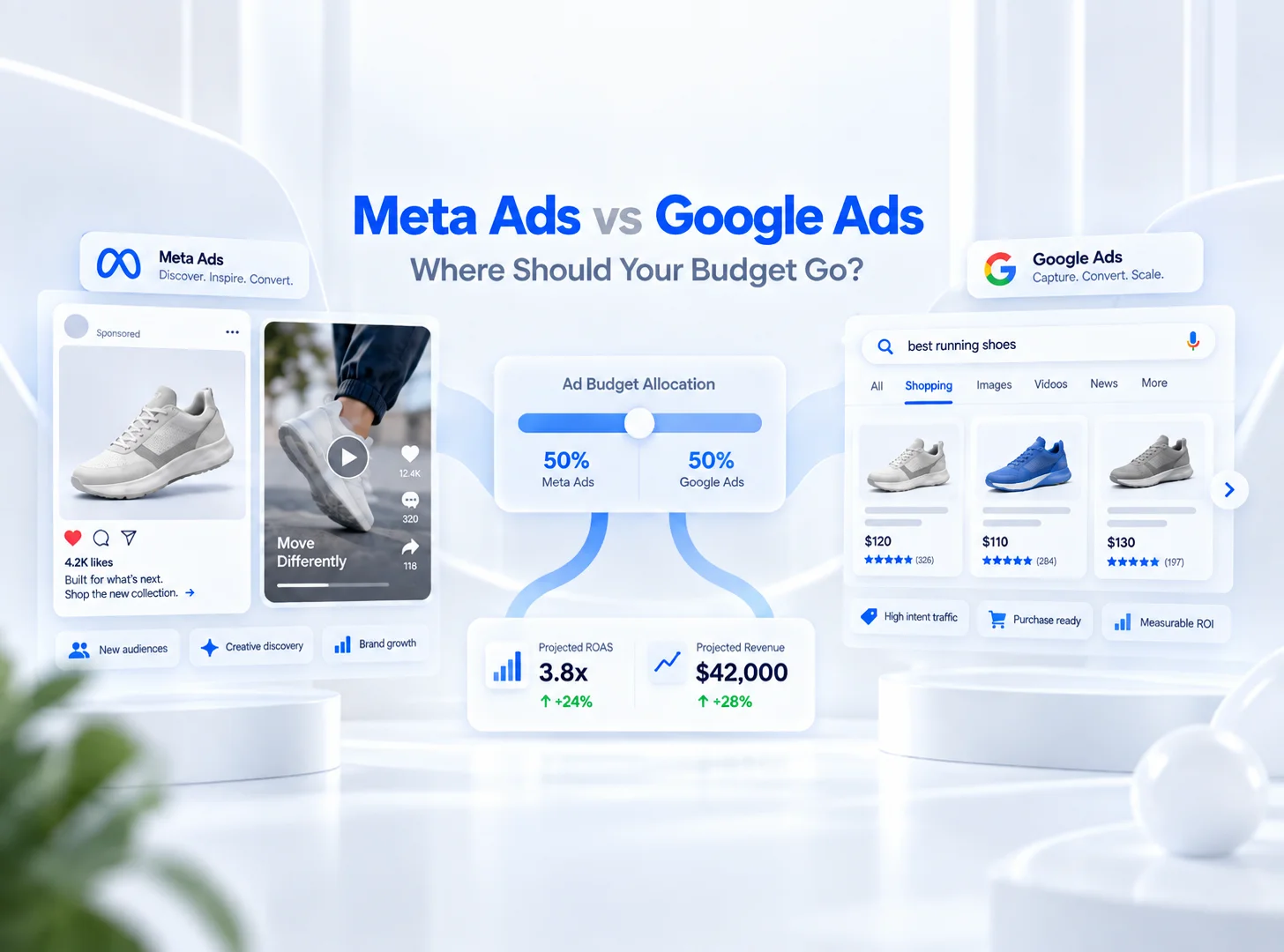
ROAS (Return on Ad Spend) trends across Meta, Google, and other paid channels reveal which campaigns are generating profitable growth and which are consuming budget without delivering meaningful returns. Beyond headline metrics, an ecommerce performance audit should also identify signs of creative fatigue before performance begins to decline. Falling click-through rates (CTR), rising CPMs, increasing frequency, and declining engagement are all early indicators that ad creatives need to be refreshed to maintain efficiency and scale.
Budget allocation between acquisition and retargeting deserves careful review each quarter, and campaign structure should be evaluated just as closely. Strategies that performed well six months ago may no longer align with your audience, competitive landscape, or profit margins. Without a deliberate audit, underperforming campaigns can continue consuming budget long after their effectiveness has declined.
#3 Email and Retention Audit
Retention is where sustainable ecommerce growth is built, and email marketing remains one of the most effective channels for driving it. The real question is whether your email program is generating repeat purchases and increasing customer lifetime value, or simply adding to send volume. Repeat purchase rate and LTV trends by cohort reveal whether retention is improving or quietly eroding over time. Segmentation gaps and list health metrics provide important context, while the share of revenue generated from email versus paid channels is one of the clearest indicators of how dependent your brand is on costly customer acquisition to sustain growth.
#4 Conversion Rate and On-Site Experience
Funnel drop-off analysis should cover three points: the product detail page, the cart, and checkout. Each stage loses buyers for different reasons, and the fixes are rarely the same across them. Mobile vs desktop conversion gaps are common and often significant, as many brands optimize for desktop while mobile drives the majority of sessions. Social proof placement and review visibility affect purchase confidence directly, and site speed problems at checkout, like too many steps, unclear shipping costs, and limited payment options, are consistent revenue drains that surface fast in any honest ecommerce website audit.
#5 AI Discoverability and Brand Presence in LLM Search
AI-generated answers in tools like ChatGPT, Perplexity, Gemini, and Google AI Overviews are becoming a key part of the customer journey, making AI visibility an important component of any ecommerce audit. Using Cite AI, brands can track how often they appear in AI-generated answers, measure share of voice against competitors, identify the prompts driving visibility, and analyze the sources being cited. This helps uncover gaps in content, product data, and brand authority that may be limiting discoverability. Combined with citation analysis and review sentiment tracking, it provides a clearer picture of how AI platforms perceive and recommend your brand.
How to Turn Audit Findings Into a Growth Roadmap
The goal is to create a sequenced roadmap that balances quick improvements with larger initiatives that unlock meaningful revenue growth. Rather than fixing everything at once, focus on the changes most likely to improve traffic quality, conversion rates, retention, and overall profitability. A quarterly audit becomes far more valuable when it ends with a clear set of priorities, defined ownership, and measurable growth targets for the next quarter.
If you’re unsure which findings deserve immediate attention, how to prioritize them, or what actions will have the greatest impact on revenue, an experienced growth partner can help. At StoreHQ, we help ecommerce brands turn audit findings into actionable growth roadmaps backed by SEO, CRO, paid media, retention, and AI visibility expertise. Book a demo to see where your biggest growth opportunities lie.
Frequently Asked Questions
1. How often should an ecommerce brand perform a growth audit?
Most ecommerce brands should conduct a comprehensive growth audit every quarter. Quarterly reviews help identify performance issues early, uncover new growth opportunities, and ensure channels like SEO, paid ads, email marketing, CRO, and AI visibility remain aligned with business goals.
2. How can StoreHQ help with an ecommerce growth audit?
StoreHQ conducts channel-by-channel audits across SEO, paid media, email marketing, CRO, and AI visibility to identify growth bottlenecks and missed opportunities. The result is a prioritized roadmap focused on increasing traffic, conversions, retention, and revenue.
3. What are the biggest signs that an ecommerce store needs an audit?
Declining conversion rates, rising customer acquisition costs, stagnant organic traffic, lower repeat purchase rates, and inconsistent revenue growth are all indicators that an audit may be needed. Regular audits help uncover the root causes before they become larger problems.
4. Does StoreHQ provide recommendations or implement the fixes as well?
Yes. Beyond identifying issues, StoreHQ helps brands prioritize opportunities and execute improvements across SEO, paid ads, email marketing, CRO, and AI discoverability. This ensures audit findings translate into measurable business outcomes rather than sitting in a report.
Turn Quarterly Audits Into a Smarter Ecommerce Growth
A quarterly ecommerce growth audit is how high-performing brands stay ahead of decay and build on their gains over time. Brands that grow consistently aren’t the ones with the biggest budgets. They’re the ones who know exactly where their system is leaking and fix it before it costs them. Running this cadence every quarter turns structured optimization into a habit, and that compounds significantly across channels and across the year.
Get a growth audit with StoreHQ and get a clear picture of where your ecommerce system is leaving revenue on the table.

 6 min read