

Blog
Listicle
10 Best Paid Advertising Platforms for Maximum ROI

Picking the wrong paid advertising platform is one of the fastest ways to burn through a marketing budget with nothing to show for it. For Shopify brands, the stakes are especially high — every dollar needs to work toward measurable revenue growth, not vanity clicks.
The paid ads landscape has matured significantly. Platforms now offer granular audience targeting, automated bidding, and conversion-focused formats that make it easier to reach high-intent shoppers. The challenge is knowing which platform fits your product, audience, and budget.
This guide ranks the 10 best paid advertising platforms for ecommerce ROI based on targeting precision, cost efficiency, creative format diversity, and real-world performance data. Whether you are scaling from six to seven figures or launching into a new market, this list gives you a clear starting point.
What Are Paid Advertising Platforms?
Paid advertising platforms are online systems that let businesses pay to display ads to targeted audiences across search engines, social media feeds, websites, and apps. They operate on models like pay-per-click (PPC), cost-per-thousand impressions (CPM), or cost-per-acquisition (CPA). Ecommerce brands use these platforms to drive qualified traffic, generate sales, and retarget shoppers who have previously visited their store.
How We Ranked These 10 Paid Ad Platforms
Rankings are based on four criteria weighted toward ecommerce outcomes: targeting precision, cost efficiency, creative format diversity, and proven ecommerce performance. Platforms were only included if they are well-established, widely used by ecommerce advertisers, and supported by substantial public performance data.
The list leads with the platform that delivers the broadest, most reliable ROI for the widest range of Shopify stores. Subsequent picks are ranked by their strength within specific use cases — audience type, product category, budget tier, or funnel stage.
StoreHQ has managed $40M+ in ad spend across Google, Meta, and Shopping campaigns since 2016, and the benchmarks in this guide reflect real campaign data from 200+ Shopify stores across fashion, beauty, home, and consumer goods.
- Targeting precision: Can you isolate high-intent or high-value audiences?
- Cost efficiency: What is the realistic CPC or CPA for an ecommerce brand?
- Creative format diversity: Search, Shopping, video, display — what is available?
- Ecommerce integrations: Does the platform connect to Shopify product feeds natively?
- Proven ROAS data: Are there reliable benchmarks from DTC and ecommerce advertisers?
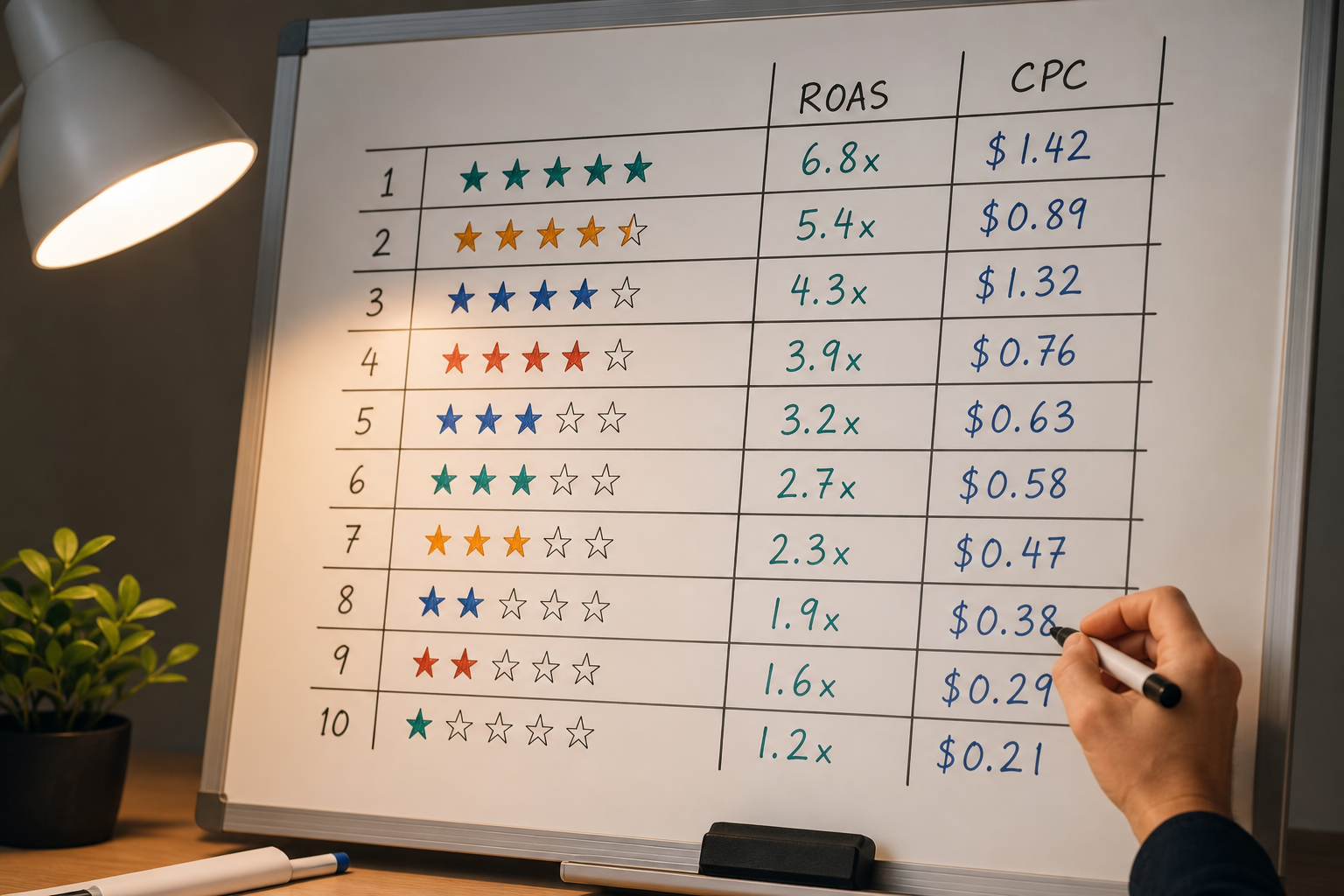
1-3: The Three Core Platforms Every Ecommerce Brand Should Run
Google Ads earns the top spot because it captures shoppers at the exact moment they are searching for what you sell. Search and Shopping campaigns put your products in front of people with demonstrated purchase intent. Performance Max consolidates Google's entire inventory into a single campaign — for brands with 50+ monthly conversions, PMax typically reduces cost-per-acquisition by 15-30% versus standalone Shopping.
Meta Ads ranks second because of its unmatched audience scale across Facebook and Instagram. Advantage+ Shopping Campaigns automate audience selection and creative rotation, letting Meta's algorithm find the most likely buyers within your budget. Creative quality is the primary performance lever here — brands that invest in strong product visuals consistently outperform those running static, low-production assets.
Google Performance Max earns the third spot as a distinct entry because it represents a fundamentally different campaign structure from standard Google Search. Feed quality is the primary lever: optimized product titles, accurate GTINs, and high-resolution images directly improve impression share before a single bid is set.
- Google Ads: Best for high-intent search traffic and Shopping campaigns; avg. ROAS 4x-8x
- Meta Ads: Best for audience scale and retargeting; Advantage+ Shopping automates creative rotation
- Google Performance Max: Best for catalog-driven growth; requires 50+ monthly conversions to optimize reliably
- All three platforms integrate natively with Shopify via dedicated apps and Conversions API
- Combined, these three platforms cover the full funnel from awareness through purchase intent
4-6: Three Platforms for Reaching Younger and Niche Audiences
TikTok Ads has become one of the most cost-effective online advertising platforms for DTC brands selling to audiences under 35. CPMs routinely run 30-50% below Meta, and TikTok Shop now shortens the path from discovery to purchase. Brands that lean into creator partnerships and user-generated content formats consistently outperform those running polished, production-heavy ads.
Microsoft Ads is consistently underutilized by ecommerce brands, which is exactly why it can deliver strong ROI. Average CPCs run 20-35% lower than equivalent Google Search terms, with an audience that skews older, higher-income, and more likely to convert on considered purchases. Google Ads campaigns can be imported directly, making setup fast for brands already running on Google.
Pinterest Ads is the strongest upper-funnel paid advertising channel for categories like home decor, fashion, beauty, and food. Pinterest users arrive already in discovery mode — searching for ideas and products before they are ready to buy. For the right product category, Pinterest can deliver lower CPAs than Meta for cold audiences at the awareness stage.
- TikTok Ads: CPMs of $9-$15 vs. $15-$25 on Meta; best for Gen Z and Millennial DTC brands
- Microsoft Ads: 20-35% lower CPCs than Google; audience skews 45+, higher household income
- Pinterest Ads: Average CPC of $0.10-$1.50; 60%+ female audience, strong in visual product categories
- TikTok and Pinterest both offer native Shopify app integrations for catalog and pixel sync
- Microsoft Ads accepts Google Ads campaign imports — reducing setup time to hours, not days
7-8: Two Platforms for Brand Building and On-Platform Purchase Intent
YouTube Ads is the dominant video platform for product research and brand familiarity. Skippable in-stream and YouTube Shopping formats build brand recognition that compounds the performance of other paid channels. Brands running YouTube alongside Google Search consistently report higher conversion rates on Search — the halo effect of video exposure is well-documented across ecommerce categories.
Amazon Ads operates in a unique environment: users are already on a shopping platform with payment details saved. Sponsored Products, Sponsored Brands, and Sponsored Display ads appear natively within Amazon search results and deliver ROAS of 5x-10x for well-optimized campaigns. Amazon DSP extends reach off-platform, enabling retargeting of Amazon shoppers who viewed your product but did not purchase.
- YouTube Ads: Billed on CPV model — you pay only when a viewer watches 30+ seconds
- YouTube Shopping overlays connect product feeds to video ads for direct purchase paths
- Amazon Sponsored Products: Avg. ROAS 5x-10x in competitive categories for optimized listings
- Amazon DSP retargets Amazon shoppers across third-party sites on the open web
- Both platforms integrate with Shopify — YouTube via Google app, Amazon via Merchant Center feed
9-10: Two Specialized Platforms for Specific Audience Segments
Snapchat Ads is an often-overlooked internet advertising platform with a tightly engaged user base — over 75% of daily users are between 13 and 34. Average CPMs of $2.95-$8.00 are among the lowest of any major paid ad platform, and Snap's augmented reality try-on formats are particularly effective for beauty, eyewear, and apparel brands. Shopify brands can connect their product catalog via the Snapchat Conversions API for dynamic retargeting.
LinkedIn Ads is the strongest pay-per-click advertising platform for reaching business buyers, procurement managers, and professionals with purchasing authority. For ecommerce brands selling B2B products, premium corporate gifting, or high-ticket professional equipment, LinkedIn's job title, company size, and seniority targeting is unmatched. The tradeoff is cost — LinkedIn CPCs average $5-$15, making budget efficiency the central challenge.
- Snapchat Ads: CPMs of $2.95-$8.00; best for fashion, beauty, and lifestyle brands targeting under-35 audiences
- Snap AR Lenses: try-on formats reduce purchase hesitation for beauty and eyewear categories
- LinkedIn Ads: CPC of $5-$15; best for B2B wholesale, corporate gifting, and high-ticket products
- LinkedIn Lead Gen Forms capture contact information natively without sending users off-platform
- Both platforms support Shopify pixel integration for conversion tracking and retargeting
Three Key Questions Before Choosing a Paid Ads Platform
Before committing budget to any platform, answer three questions: Where does your audience actually spend time online? What stage of the funnel are you trying to influence — awareness, consideration, or purchase? And do you have the creative assets the platform rewards?
A brand selling home decor to women 35-55 will find Pinterest and Meta more efficient than LinkedIn or Snapchat. A brand selling B2B office supplies will find LinkedIn and Google Search far more cost-effective than TikTok. Platform fit drives ROI before a single campaign setting is touched.
Most Shopify brands see the best results starting with two platforms — typically Google Ads and Meta Ads — before expanding to a third once both are profitable and well-optimized. Running too many platforms simultaneously with a limited budget spreads data too thin for any algorithm to perform effectively.
- Where does your target audience spend the most time online?
- Which funnel stage needs the most investment — acquisition, retargeting, or retention?
- Do you have static, video, or catalog-based creative assets ready to deploy?
- What is your monthly budget, and which platforms require higher spend to generate actionable data?
- Are your Shopify pixel, Conversions API, and product feed set up correctly before launching?
Five Signs Your Current Paid Advertising Strategy Needs a Reset
Declining ROAS quarter-over-quarter is the clearest signal that campaigns need structural changes — not just bid adjustments. If your cost-per-acquisition has risen more than 20% without a corresponding increase in average order value, the campaign architecture, creative, or audience targeting is likely the root cause.
Running on a single advertising platform with no retargeting layer is another common gap. Single-platform dependence means one algorithm update or cost spike can derail your entire performance marketing revenue. A diversified paid ads strategy across two to three platforms creates resilience.
Poor attribution — relying on last-click data without Conversions API — systematically undervalues upper-funnel channels and leads to budget decisions based on incomplete data. Fixing tracking infrastructure before scaling spend is the highest-leverage action most ecommerce brands can take.
- ROAS declining quarter-over-quarter without a clear explanation in market conditions
- Customer acquisition costs rising faster than average order value growth
- Running on a single paid advertising platform with no retargeting campaigns active
- Attribution based on last-click only — no Conversions API or server-side tracking in place
- Creative assets not refreshed in 60+ days, leading to audience fatigue and rising CPMs
How to Build a Paid Advertising Stack for Ecommerce Growth
Start with Google Shopping and one Meta campaign before touching any other platform. These two channels generate the highest-intent traffic and the most reliable conversion data for Shopify stores. Once both are profitable at your target CPA, introduce a third platform based on where your audience research points.
Feed quality and pixel accuracy are the infrastructure layers that determine how well any platform can optimize. An unoptimized product feed and a broken Conversions API integration will limit performance regardless of budget or bid strategy. Fix these before scaling spend.
Ongoing creative testing is the single most impactful ongoing activity on Meta, TikTok, and YouTube. Rotating in new creative every 3-4 weeks prevents audience fatigue and gives the algorithm fresh signals to optimize against. Brands that treat creative as a performance lever — not just a design task — consistently outperform those that do not.
- Step 1: Launch Google Shopping and one Meta campaign with clean conversion tracking
- Step 2: Optimize product feed quality — titles, GTINs, images, and pricing accuracy
- Step 3: Build retargeting audiences on both platforms before expanding to new channels
- Step 4: Introduce a third platform (TikTok, Pinterest, or Microsoft) once primary channels are profitable
- Step 5: Rotate creative every 3-4 weeks and review attribution data monthly to reallocate budget
| Platform | Best Use Case | Avg. CPC Range | Shopify Integration | Min. Monthly Budget |
|---|---|---|---|---|
| Google Ads | High-intent search and Shopping | $0.50-$3.00 | Native via Google & YouTube app | $1,000-$3,000 |
| Meta Ads | Audience scale and retargeting | $0.40-$2.00 | Meta Pixel + Conversions API | $1,500-$5,000 |
| Google Performance Max | Product feed-driven growth | $0.30-$2.50 | Google Merchant Center sync | $1,500-$3,000 |
| TikTok Ads | Gen Z and Millennial DTC brands | $0.20-$1.00 | TikTok for Shopify app | $500-$1,500 |
| Microsoft Ads | Lower-CPC search traffic | $0.30-$1.80 | Microsoft Merchant Center | $500-$1,500 |
| Pinterest Ads | Early purchase intent capture | $0.10-$1.50 | Pinterest Shopify app | $500-$1,000 |
| YouTube Ads | Brand building with video | $0.05-$0.30 (CPV) | Google & YouTube Shopify app | $1,000-$2,000 |
| Amazon Ads | High-intent on-platform buyers | $0.30-$1.50 | Amazon + Shopify catalog feed | $500-$2,000 |
| Snapchat Ads | Affordable Gen Z reach | $0.20-$0.80 | Snapchat Conversions API | $500-$1,000 |
| LinkedIn Ads | B2B and high-ticket products | $5.00-$15.00 | LinkedIn Insight Tag pixel | $2,000-$5,000 |
Frequently Asked Questions
-
What are the best paid advertising platforms for ecommerce?
Google Ads and Meta Ads are the strongest paid advertising platforms for most ecommerce brands because they combine high-intent targeting with large audience scale. Google captures purchase-ready shoppers through Search and Shopping campaigns, while Meta excels at audience building and retargeting. For DTC brands targeting younger buyers, TikTok Ads and Snapchat Ads offer lower CPMs and strong creative engagement. The right mix depends on your product category, audience, and budget. -
What is pay-per-click advertising and how does it work?
Pay-per-click advertising is a model where advertisers pay only when a user clicks their ad rather than for every impression served. Google Search, Microsoft Ads, and many social media platforms offer PPC pricing. Advertisers set bids for keywords or audience segments, and the platform runs an auction to determine ad placement. PPC is cost-efficient for ecommerce because spend scales directly with traffic volume and can be adjusted in real time based on ROAS data. -
Which pay-per-click advertising platforms work best for small ecommerce budgets?
For smaller budgets, TikTok Ads, Snapchat Ads, and Pinterest Ads offer the lowest entry costs among major paid ad platforms, with CPMs often below $10. Microsoft Ads provides lower CPCs than Google for equivalent search terms, making it a cost-efficient starting point for brands already running Google campaigns. Google Shopping with a well-optimized product feed can also deliver strong returns on budgets of $500-$1,000 per month when campaigns are focused on best-selling SKUs. -
What is programmatic advertising and should ecommerce brands use it?
Programmatic advertising is the automated buying and selling of digital ad inventory using real-time bidding and audience data, serving ads across thousands of publisher sites without manual placement negotiations. For ecommerce brands, programmatic is most valuable as a retargeting tool — reaching shoppers who visited your store but did not convert. Amazon DSP is one of the most ecommerce-relevant programmatic platforms, leveraging first-party purchase intent data to reach high-value audiences. -
How do online advertising platforms track conversions for Shopify stores?
Shopify stores track paid ad conversions through platform-specific pixels combined with Conversions API integrations. The pixel fires browser-based events like add-to-cart and purchases, while the Conversions API sends the same data server-side for improved accuracy under iOS privacy restrictions. Google, Meta, TikTok, Pinterest, and Snapchat all offer Shopify apps that streamline this setup. Accurate conversion tracking is the foundation of effective campaign optimization and reliable ROAS reporting. -
Is social media advertising effective for small businesses?
Social media advertising is one of the most accessible forms of paid advertising for small businesses because platforms like Meta, TikTok, and Pinterest allow campaigns to start with modest daily budgets. Targeting options let small brands focus spend on highly specific audiences rather than broad demographics, improving efficiency. The biggest challenge for small businesses is creative quality — platforms reward engaging, native-feeling content, and brands that invest in strong visuals consistently outperform those running generic ad formats. -
How many paid advertising platforms should a Shopify brand run simultaneously?
Most Shopify brands see the best results starting with two platforms — typically Google Ads and Meta Ads — before expanding once both are profitable and well-optimized. Running too many platforms simultaneously with a limited budget spreads data too thin for any algorithm to optimize effectively. Brands with monthly ad budgets above $10,000 can more effectively test a third platform like TikTok, Pinterest, or Microsoft Ads without diluting the performance of their primary channels. -
What is the difference between paid ads platforms and advertising and marketing companies?
Paid ads platforms are the technology infrastructure where ads are bought, targeted, and served — Google, Meta, TikTok, and similar networks. Advertising and marketing companies are teams that manage strategy, creative, and campaign execution on behalf of brands across those platforms. Many ecommerce brands work with a specialist agency to manage their paid advertising because campaign optimization, creative testing, and attribution analysis require dedicated expertise to drive consistent ROAS improvement over time.