AI shopping is changing what your product pages need to do. They still have to convince shoppers to buy, but they also need to give search and AI platforms clear information about what you sell, who it is for, and why someone should choose it.
That is where product page optimization for AI search comes in. A product page can look great to a shopper but still leave important information unclear to AI systems. Thin descriptions, missing schema, inconsistent product data, or unanswered questions can all make your products harder to understand and discover.
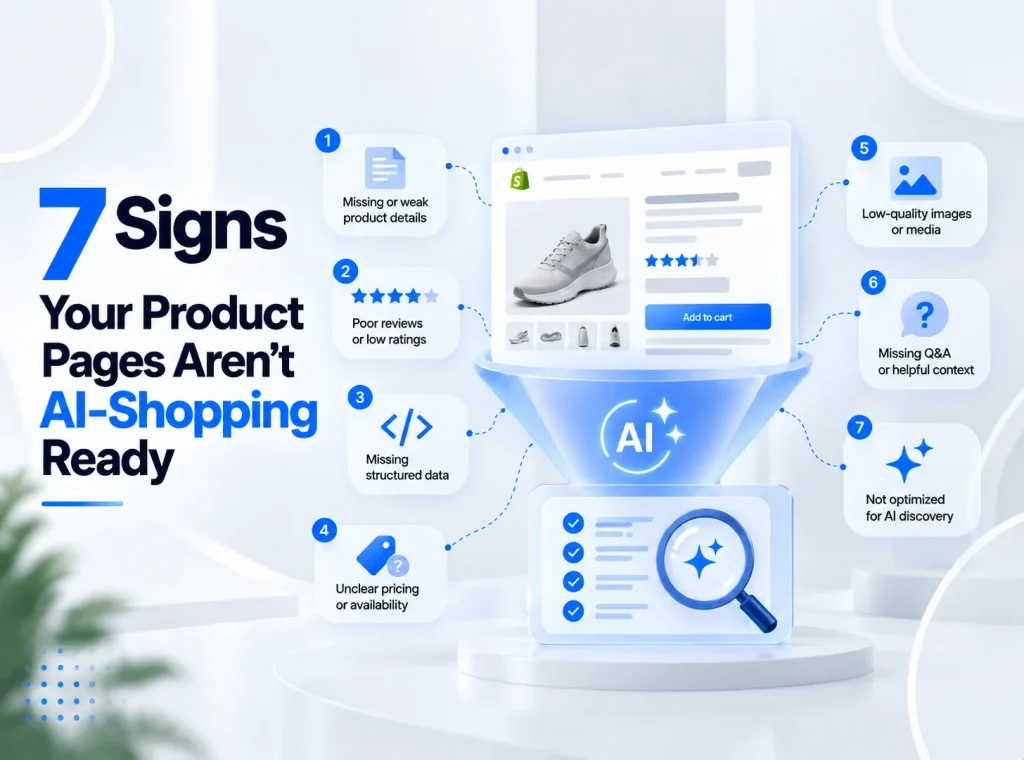
In this blog, we’ll see seven signs your product pages may not be ready for AI-driven shopping.
1. Your Product Descriptions Are Mostly Features
Materials, dimensions, ingredients, and specifications tell shoppers what a product includes. But they do not always explain why someone should buy it.
A stronger product page also answers practical questions, like:
- Who is the product for?
- What problem does it solve?
- When would someone use it?
- What makes it different from similar options?
Connecting features to real buying situations gives shoppers more useful information. It also gives AI systems more context when they are trying to match products with specific searches and questions.
2. Your Product Schema Is Incomplete
Important product information should not only appear on the page. It should also be clearly structured behind the scenes.
Schema markup for Shopify products can help define details such as the product, price, availability, ratings, offers, and reviews when they apply. StoreHQ’s AI-ready Shopify development includes Product, Offer, AggregateRating, and Review schema to help search and AI systems understand product information more clearly.
If important details are missing or different from what shoppers see on the page, it can make your product information harder to interpret.
3. Your Product Data Changes Across Channels
Your Shopify store may show one product title, while your product feed uses another. A retailer may have an older description. A marketplace listing may still show outdated specifications.
Those differences make your product information less consistent.
A strong structured data ecommerce setup goes beyond adding schema. Product titles, categories, prices, variants, descriptions, and specifications should stay consistent wherever possible across your store, feeds, and third-party listings.
The clearer and more consistent your product information is, the easier it becomes for different platforms to understand what you actually sell.
4. You Do Not Answer Real Buyer Questions
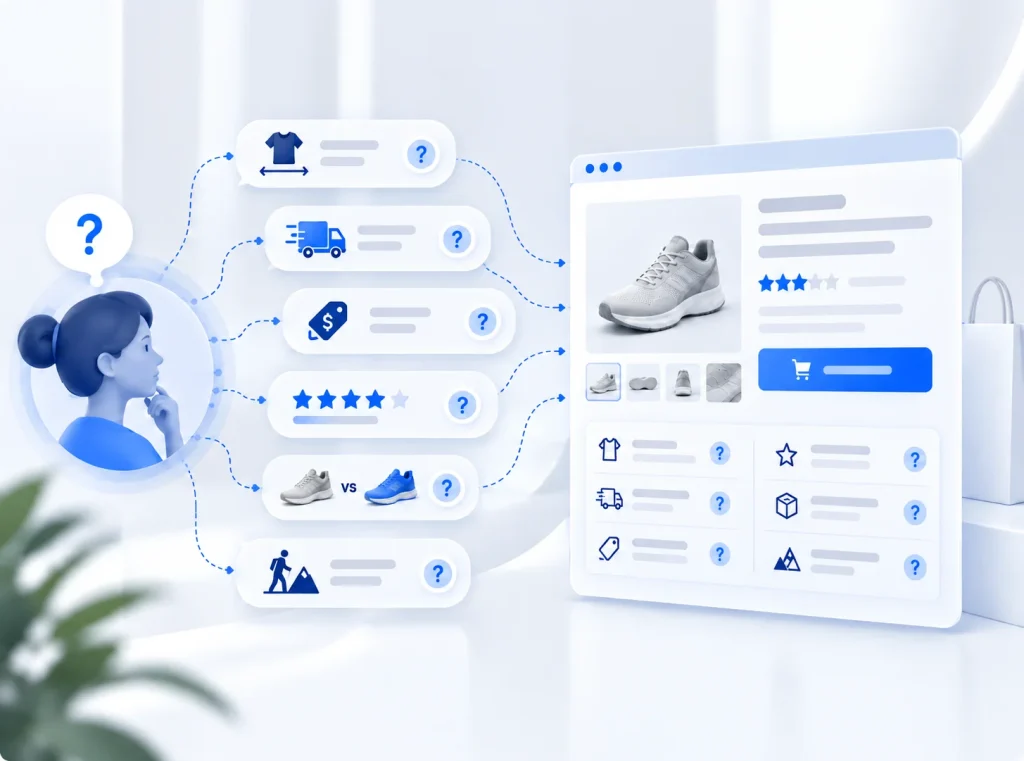
Shoppers rarely think only about product names.
They ask questions such as:
“Is this suitable for sensitive skin?”
“Will this fit wide feet?”
“Which option is better for travel?”
If your product page does not answer the questions people naturally ask before buying, useful context is missing.
The guide to making products discoverable in AI answers explains why buyer-focused questions, comparisons, and use cases can support AI visibility.
5. Reviews Are Missing or Hard to Find
Your product description tells shoppers what the brand says about the product. Reviews show what customers experienced after buying it.
That makes reviews useful for both trust and context.
Customers often mention details that the main product copy may not cover, such as fit, quality, durability, sizing, or how they actually use the product.
If reviews are limited, outdated, or difficult to find, shoppers lose an important decision-making signal. Review information should also be marked up correctly where applicable so it supports the rest of your product data.
6. Your Product Pages Are Difficult to Crawl
Even a well-written product page has limited value if search and AI systems struggle to access it.
Problems with indexing, internal linking, site structure, or crawler access can make important product content harder to discover. That is why AI readiness should work alongside technical SEO rather than being treated as a completely separate task.
StoreHQ’s quarterly ecommerce growth audit looks at AI discoverability alongside SEO, paid ads, email, and CRO.
7. You Have No Idea Whether AI Is Mentioning Your Products
The final sign is simple: you are making changes without knowing whether they are improving visibility.
ChatGPT product recommendations, Gemini, Perplexity, Google AI experiences, and other AI tools are becoming another place where shoppers can research and compare products.
You do not need to track every possible question someone could ask. Start with the queries that matter most to your products.
Look at whether your brand appears, which competitors are being recommended, and which sources AI tools rely on when discussing products in your category. That gives you a clearer idea of where your visibility gaps may be.
FAQs
What is product page optimization for AI search?
It means making your product information clear, structured, useful, and easy for both shoppers and AI systems to understand.
Does Shopify automatically add product schema?
Shopify themes may include basic structured data, but brands should still check that important product, offer, review, and availability information is complete and accurate.
Can better product descriptions improve AI shopping visibility?
Clear descriptions that explain features, use cases, differences, and buyer questions can give AI systems more useful context about your products.
Are reviews important for AI shopping assistant visibility?
Reviews add useful customer context and trust signals that can strengthen the information available about your products.
How can I tell if my products appear in AI recommendations?
Test relevant buying questions across major AI platforms and track how often your brand appears, which products are mentioned, and which sources are cited.
Make Your Product Pages Easier to Find and Buy From
Getting your store ready for AI shopping does not mean rewriting every page for a machine.
Start with what also makes the experience better for your customers: clear descriptions, complete product data, useful reviews, direct answers to common questions, accurate schema, and fewer technical barriers.
Focus first on the product pages that already drive the most traffic or revenue. Check whether the information is complete, whether your schema matches what is on the page, and whether shoppers can quickly find the answers they need.
Get a growth audit with StoreHQ to find the product-page and AI visibility gaps that may be limiting your ecommerce growth.

 6 min read