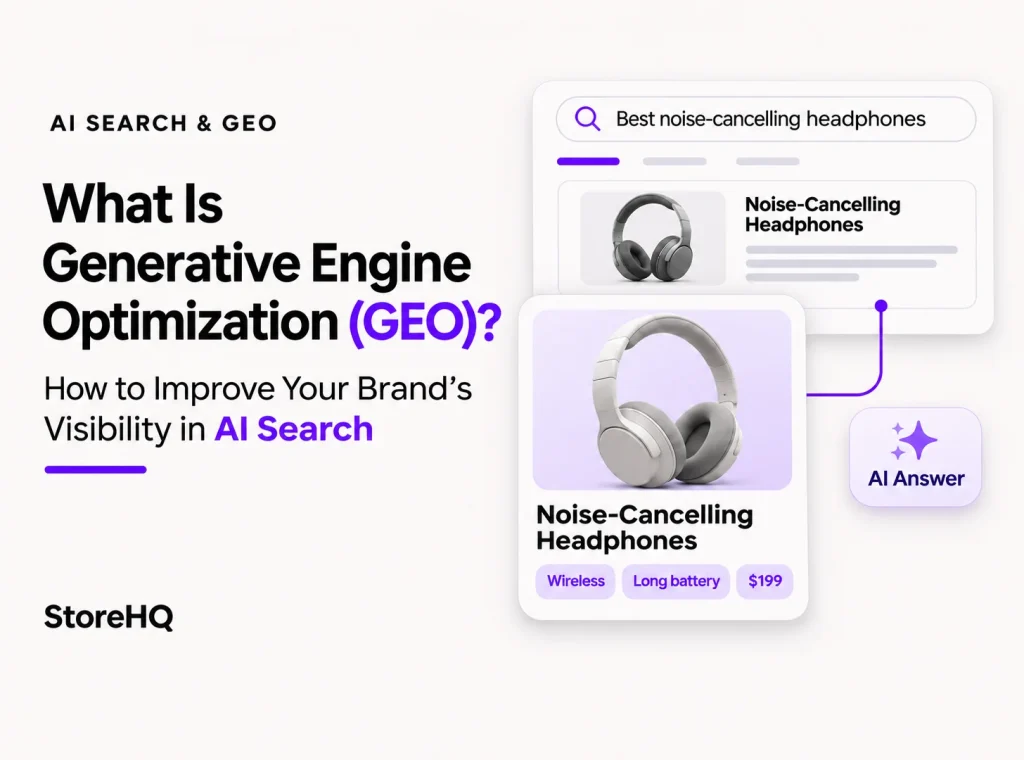
The way people search for information online is changing. Instead of clicking through multiple search results, users are increasingly asking AI-powered platforms for direct answers, product recommendations, comparisons, and business insights.
Platforms such as ChatGPT, Google AI Overviews, Gemini, and Perplexity are changing how people discover information and interact with brands.
This is where Generative Engine Optimization (GEO) becomes important
What Is Generative Engine Optimization (GEO)?
Generative Engine Optimization (GEO) is the process of improving a brand’s online content and digital presence to increase its chances of being referenced in AI-generated search responses.
Traditional search engines typically display a list of web pages related to a user’s query. Generative AI platforms can retrieve relevant information, understand the context, and generate conversational answers using information from different sources.
GEO focuses on making a business’s content informative, accurate, well-structured, and relevant so that AI-powered systems can understand and potentially use it when generating responses.
How Does Generative Engine Optimization Work?
GEO is connected to how generative AI systems retrieve and process information before producing an answer.
Although the exact process varies between platforms, a simplified workflow looks like this:
1. User Query
A user enters a question into an AI-powered platform.
Example: “Which digital marketing strategies help ecommerce businesses increase sales?”
2. Information Retrieval
Depending on the platform and search experience, the system may retrieve relevant information from search indexes, websites, and other available sources.
3. Content Analysis
The retrieved information is processed to understand its relevance, accuracy, and connection to the user’s question.
4. AI-Generated Response
The AI system uses relevant information to generate a conversational answer that addresses the user’s query.
5. Source References
Some platforms display citations or links to supporting websites, allowing users to explore the original information.
GEO is becoming an important part of modern digital marketing, as businesses look beyond traditional search rankings to understand how their brands appear in AI-generated responses. Ahrefs explains the growing role of GEO in digital marketing.
Common GEO Mistakes Businesses Should Avoid
As AI-powered search becomes more popular, businesses may be tempted to use shortcuts to improve visibility. However, some approaches can create more problems than benefits.
Here are six mistakes worth avoiding:
1. Ignoring Traditional SEO
GEO does not eliminate the need for technical SEO, keyword research, quality content, or website accessibility.
2. Publishing Generic AI-Generated Content
Using AI to produce large amounts of repetitive content without adding original information or human review can reduce content quality.
3. Overusing Keywords
Repeating keywords unnaturally makes articles difficult to read and does not improve the actual usefulness of the information.
4. Publishing Unsupported Statistics
Unverified figures, outdated claims, and missing references can damage the credibility of your content.
5. Expecting Guaranteed AI Mentions
No GEO strategy can guarantee that ChatGPT, Gemini, or another platform will mention or recommend a particular business.
6. Forgetting to Update Existing Content
Outdated service descriptions, broken links, and inaccurate information can make your website less useful to readers.
A successful approach should focus on accuracy, originality, technical accessibility, and genuine customer value.
GEO Implementation Checklist: What Should D2C Brands Do First?
For D2C brands, getting started with GEO means making it easier for AI platforms to understand their products, recognize their brand, and recommend their offerings when customers search for relevant solutions.
Start with these practical steps:
- Identify customer search questions: Understand what shoppers ask AI platforms, such as “What is the best skincare product for dry skin?” or “Which sustainable clothing brands are worth buying?”
- Optimize product pages: Include clear product descriptions, ingredients or materials, features, benefits, pricing, sizing, and usage instructions.
- Create helpful buying guides: Publish content that answers common customer questions, compares products, explains product benefits, and helps shoppers make informed purchase decisions.
- Use clear content structure: Organize product pages and blog posts with descriptive headings, concise explanations, and relevant information.
- Highlight customer reviews: Encourage genuine reviews, ratings, and detailed customer feedback that help shoppers understand real product experiences.
- Maintain accurate product information: Keep product availability, prices, specifications, shipping details, and return policies updated across your website.
- Strengthen product and brand credibility: Build a consistent online presence through relevant publications, industry websites, partnerships, and trusted brand mentions.
- Improve website discoverability: Ensure important product pages and buying guides can be crawled and indexed, and connect related pages through internal links.
D2C brands should focus on helping customers discover, understand, and trust their products. Accurate product information, useful buying resources, authentic customer feedback, and a well-structured website create a stronger foundation for visibility in AI-powered search.
Frequently Asked Questions
1. What is the main purpose of Generative Engine Optimization?
The main purpose of GEO is to improve a brand’s visibility in AI-generated responses by making its online information useful, relevant, credible, and accessible.
2. Is GEO different from SEO?
Yes. SEO focuses on improving visibility in traditional search engine results, while GEO focuses on improving visibility in AI-generated answers. Both approaches share important content and technical foundations.
3. Which platforms are relevant to GEO?
Some relevant platforms include ChatGPT, Google AI Overviews, Google AI Mode, Gemini, Microsoft Copilot, and Perplexity. Their information retrieval and response-generation processes can differ.
4. Can GEO increase website traffic?
GEO can create opportunities for additional brand discovery and referral traffic when AI platforms reference a business’s website. However, not every brand mention generates a website visit, and increased traffic is not guaranteed.
5. How long does GEO take to show results?
There is no fixed timeline. Results depend on content quality, website accessibility, competition, platform behavior, and how frequently relevant information is retrieved. Businesses should monitor their performance consistently.
6. Is GEO useful for small businesses?
Yes. Small businesses can improve their chances of being discovered by publishing helpful niche-specific content, maintaining accurate business information, demonstrating expertise, and strengthening their website’s technical foundations.
Staying Visible in the Evolving Search Landscape
The way people discover information online is changing. As AI-powered platforms become part of everyday search, businesses need to think beyond traditional search rankings and focus on making their content useful, credible, and easy to understand.
Generative Engine Optimization helps brands build this visibility by combining strong content, accurate information, structured website pages, and a consistent digital presence.
Businesses that want a more strategic approach can explore StoreHQ’s Generative Engine Optimization services to understand how to improve visibility across AI-powered search experiences.

 8 min read