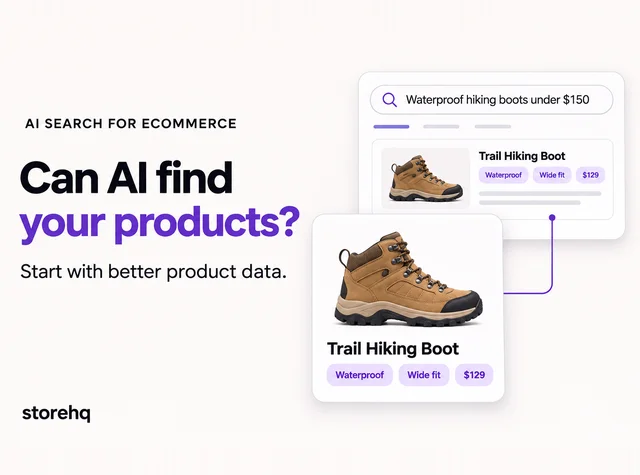
Your competitors might be showing up in ChatGPT answers while your brand gets left out.
A shopper asks for the best products in your category. AI recommends three brands. Yours is not one of them.
Google rankings won’t show you that. AI visibility tracking can.
In this article, we will look at how to check where your brand appears, compare it with competitors, and measure whether that visibility is improving.
Your Google Rankings Won’t Tell You This
Ranking on Google and appearing in an AI answer are not the same thing.
Traditional Google search gives shoppers a list of results. AI tools may answer directly, mention brands, compare products, or cite sources.
That gives you two signals to watch: brand mentions and website citations.
Your store could rank well for a product keyword and still be missing from an AI shortlist. It could also be cited as a source without your brand being named clearly.
That is why AI visibility needs to be tracked separately from normal SEO rankings.
What Does AI Say When Shoppers Ask About Your Products?
Start with the questions a new customer would actually ask.
If you sell skincare, don’t just search for your brand name. Test questions like:
- What is the best moisturizer for dry skin?
- Which skincare brands are good for sensitive skin?
- What should I look for in a vitamin C serum?
- Which moisturizers are under $50?
Run the same questions across ChatGPT, Gemini, and Perplexity. Record which brands appear and which websites are cited.
AI answers can change from one run to the next. Repeated patterns across the same questions tell you much more.
Four Signals That Show How Visible Your Brand Really Is
You do not need a dashboard full of numbers.
Say a skincare brand tracks 20 buyer questions. It appears in 6 answers. Its website gets cited in 3. Your main competitor appears in 12. Two answers contain outdated product information.
That gives you four useful signals:
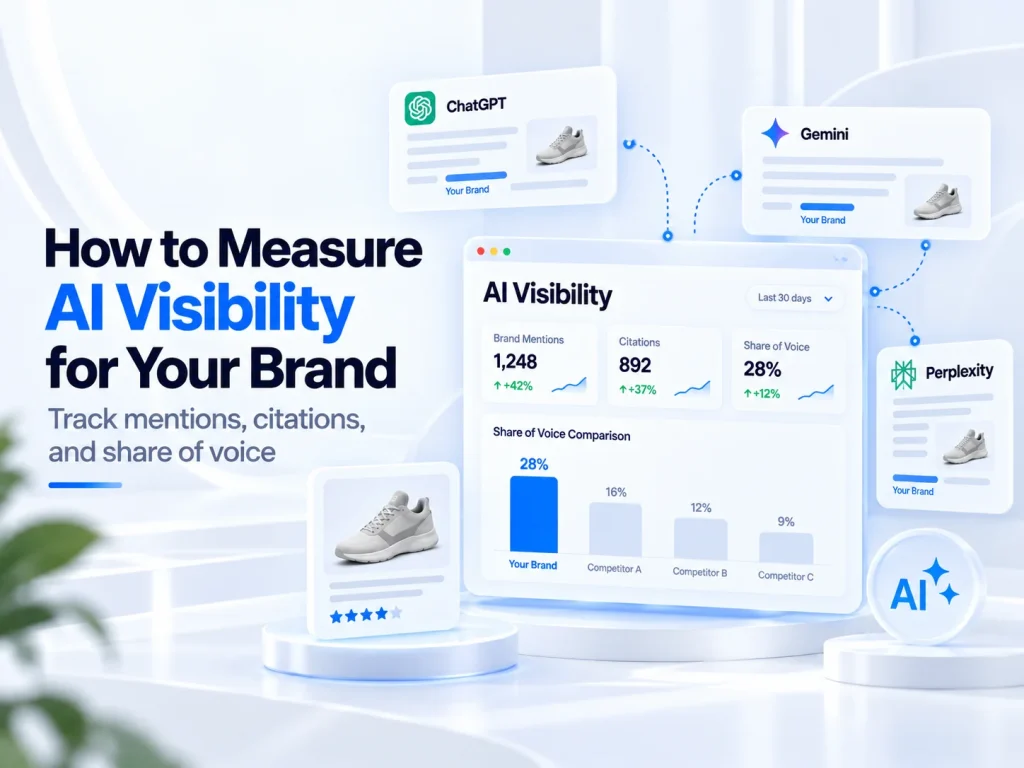
- Brand mentions show how often your business appears.
- Website citations show how often AI tools reference your own pages.
- Share of voice in AI search compares your visibility with competing brands.
- Brand accuracy shows whether AI is describing your products correctly.
Using a simple mentions-based calculation, if your brand earns 6 mentions and competitors collectively earn 18, your share of voice is 25%.
Different platforms may calculate AI share of voice differently, so always check what the score actually represents.
The goal is not to chase one perfect score. It is to see where you appear, where you do not, and whether that pattern changes.
Are Your Competitors Getting Recommended Instead?
Look at the questions where your brand is missing but the same competitors keep showing up.
Why are they being recommended? Better reviews? Clearer product benefits? Stronger buying guides? More third-party coverage?
If competitors keep appearing for “best moisturizer for sensitive skin,” check whether your own product pages clearly explain ingredients, skin type, texture, use, and who the product is for.
These AI-shopping-ready product page checks can help you spot information gaps that make products harder for shoppers and AI tools to understand.
The goal is to understand why they’re part of the answer when you’re not.
Is Your AI Visibility Actually Improving?
Keep the same prompt list and platforms. Record the date, brand mentions, citations, competitor mentions, and any inaccurate details. Then repeat the check monthly.
Over time, this gives you a simple GEO reporting view you can compare month to month.
As the prompt list grows, an AI visibility tool can make tracking easier.
But AI search rank tracking is not the same as tracking position 1, 2, or 3 on Google. AI answers can vary, and different tools may use different prompts and scoring methods.
Focus on trends instead.
Are you appearing in more relevant answers? Are citations increasing? Are competitors showing up less often for questions that matter to your category?
Not Showing Up? Here’s What to Check First
Start with the prompts where your brand is missing.
Do your product pages answer those buyer questions clearly? Are product details easy to find? Do you have useful comparisons, FAQs, buying guides, reviews, and accurate structured product information?
Then look beyond your site. Reviews, editorial mentions, and other credible third-party sources can also shape what AI systems find and reference.
If you are unsure where the gaps are, a broader ecommerce growth audit can help you review technical SEO, product content, conversion issues, and AI discoverability together.
Also keep referral traffic separate from visibility.
GA4 can track visits from AI assistants such as ChatGPT and Gemini, but it cannot tell you every time your brand appeared in an AI answer without a click.
That is why traffic and AI visibility should be measured separately.
Frequently Asked Questions About AI Visibility Tracking
How can I track brand mentions in ChatGPT?
Use a consistent set of buyer questions and record when your brand appears. Repeat the same checks over time.
What is AI visibility tracking?
It measures how often your brand appears in AI answers, which pages get cited, and how your visibility compares with competitors.
Can I track AI search rankings like Google rankings?
Not exactly. Mentions, citations, share of voice, and trends are more useful than fixed positions.
What does share of voice mean in AI search?
It shows how much visibility your brand gets compared with competitors across a defined set of prompts.
How often should I check AI visibility?
Monthly is a practical starting point for most stores.
Know Where Your Brand Stands in AI Search
You do not need hundreds of prompts to learn something useful. Start with the questions that matter to your customers, see which brands appear, and track the pattern over time.
If competitors keep showing up where your brand does not, you have something specific to investigate instead of guessing.
Get a free growth audit from StoreHQ to see where SEO, product content, and AI discoverability may be limiting your store’s visibility.

 8 min read