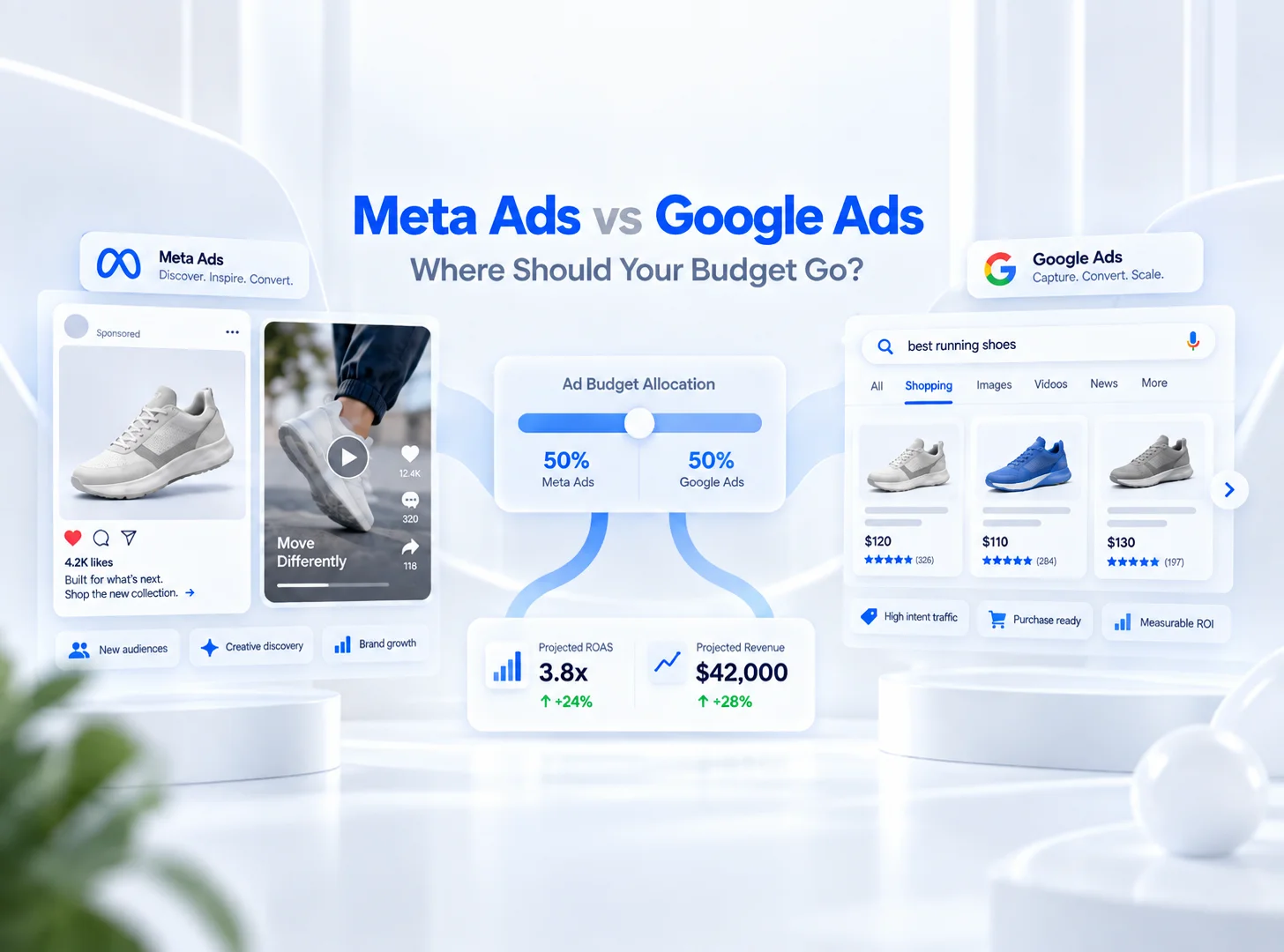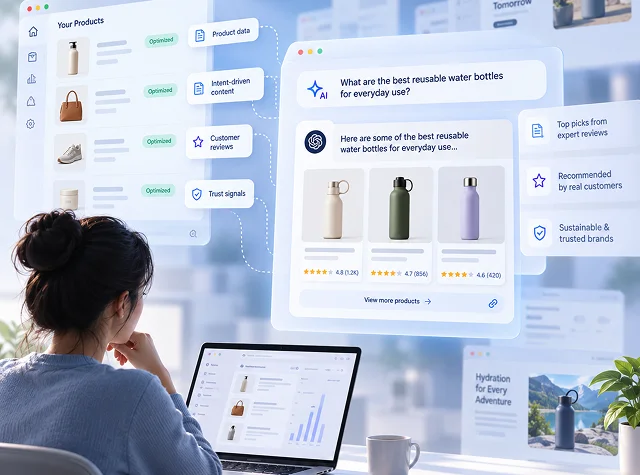
Product discovery no longer follows one search path. A shopper might type “best running shoes for flat feet” into Google, open a few product pages, and compare options. Another might ask ChatGPT, Gemini, or Perplexity to recommend three pairs and explain which one fits their needs best.
Google is also adding more AI-generated experiences to search. So this is not simply Google versus AI. It is a shift between two ways of discovering products: browsing a list of results or getting a direct, summarized answer.
For Shopify brands, the AI search vs Google Search shopping shift changes what visibility means. Ranking on Google still matters. But now your products also need to be easy for AI systems to understand, compare, and recommend.
Google Search Still Captures High-Intent Shopping Demand
Traditional Google Search remains powerful when shoppers already have a clear idea of what they want.
They search with specific keywords, compare organic results, browse Shopping listings, read reviews, and move between category and product pages before making a decision.
That means the fundamentals of ecommerce SEO still matter: crawlable pages, useful product descriptions, strong collection pages, internal linking, structured data, fast load times, and content built around high-intent searches.
A proper ecommerce growth audit should still review these areas because weak technical SEO or poorly optimized commercial pages can reduce visibility before shoppers even reach your store.
AI Search Shortens the Comparison Process
AI shopping discovery works differently.
Instead of searching “best carry-on luggage,” a shopper might ask, “What is the best lightweight carry-on under $250 for frequent international travel?”
They can then ask follow-up questions about size, durability, features, or alternatives without starting another search. AI tools can gather information, compare products, and narrow the options before a shopper reaches a brand’s website.
This is how AI search is changing ecommerce. If your store ranks well but your product information is unclear or incomplete, you may still miss this part of the shopping journey.
AEO vs SEO: What Actually Changes?

The AEO vs SEO conversation can make it sound like brands need to choose one strategy over the other.
They do not.
SEO helps search engines crawl, understand, index, and rank your pages. Answer engine optimization builds on that foundation by making your information easier for AI systems to understand, verify, and include in answers.
The basics have not disappeared. The way shoppers receive information is changing.
That means optimizing for AI search engines should support your existing SEO strategy rather than replace it.
SEO still focuses on search intent, technical health, internal links, authority, page relevance, and rankings. AEO puts more emphasis on clear product details, structured data, direct answers, useful comparison information, reviews, consistent brand details, and credible off-site sources.
For Shopify brands, the strongest approach is to build for both.
What Shopify Brands Should Optimize Now
Creating one completely separate strategy for Google and another for AI can create more work without fixing the real problem.
- Protect your SEO foundation- Keep product and collection pages fast, crawlable, internally linked, and aligned with buyer intent.
- Improve product data- Keep titles, specifications, categories, pricing, availability, and product feeds clear and consistent.
- Add structured context- Product, Offer, and Review schema can help machines understand important product information.
- Answer buying questions- Explain who the product is for, what it helps with, and how it compares with other options.
- Build trust beyond your site- Reviews, retailer listings, editorial mentions, and consistent third-party information can strengthen credibility.
These changes can support conversion as well. Clearer product information is easier for AI systems to interpret and easier for shoppers to trust.
Measure Both Types of Visibility
Google rankings and organic clicks still matter, but they no longer show the full picture.
Brands should also look at whether their products appear in AI-generated answers, which competitors are being recommended, what questions shoppers are asking, and which websites AI tools repeatedly reference.
If AI visibility is weak, review your product data, schema, buyer-focused content, reviews, and off-site authority.
Our guide on making products discoverable in AI answers explores these signals in more detail.
Frequently Asked Questions
Is AI search replacing Google Search for ecommerce?
No, AI search is adding another product discovery path while Google remains important for high-intent searches and direct shopping activity.
What is the difference between AEO and SEO?
SEO focuses on helping pages rank in search results, while AEO helps information become easier for AI systems to understand and use in generated answers.
How is AI search changing ecommerce product discovery?
AI search lets shoppers compare products, ask follow-up questions, and narrow their choices before visiting individual ecommerce websites.
Should Shopify brands optimize for AI search engines now?
Yes, Shopify brands should start improving product data, structured content, reviews, and authority while continuing to invest in traditional SEO.
Can the same content support both Google Search and AI search?
Yes, clear product information, useful buyer-focused content, structured data, and strong trust signals can improve visibility across both search experiences.
Search Visibility Now Has Two Jobs
Google Search and AI search are not replacing each other. They are giving shoppers two different ways to move from a question to a shortlist.
SEO helps your Shopify store compete when shoppers search, browse, and click. AEO helps your products become easier to understand and recommend when AI systems compare options.
Book a growth audit to understand where your store is visible and where AI systems may be missing your products.

 6 min read