Getting the first order is important. But if customers rarely come back, your Shopify store has to keep spending to replace them.
That can make growth expensive. Paid ads may still bring in new buyers, but rising acquisition costs and weak retention can squeeze margins.
Improving your repeat purchase rate gives you another way to grow. You get more value from customers who already know your products instead of relying only on the next first-time buyer.
So, what is stopping them from coming back?
In this blog, you’ll learn where to start, how post-purchase emails and the customer experience affect retention, and what you can do to increase repeat purchases without spending more on ads.
Start With What Happens After the First Order
Look at the customer journey after someone buys.
- How many customers place a second order?
- How long does that usually take?
- Are certain products more likely to lead to another purchase?
- Are customers buying once and then disappearing?
A low repeat purchase rate does not automatically mean your emails are the problem. Customers may have had a poor delivery experience. They may not know how to use the product properly. The product may not naturally need reordering soon. Or there may simply be no follow-up encouraging them to return.
Give Customers a Reason to Open Your Post-Purchase Emails
An order confirmation tells customers their payment went through. Your post-purchase email flow should do more.
Think about what someone needs after buying from you.
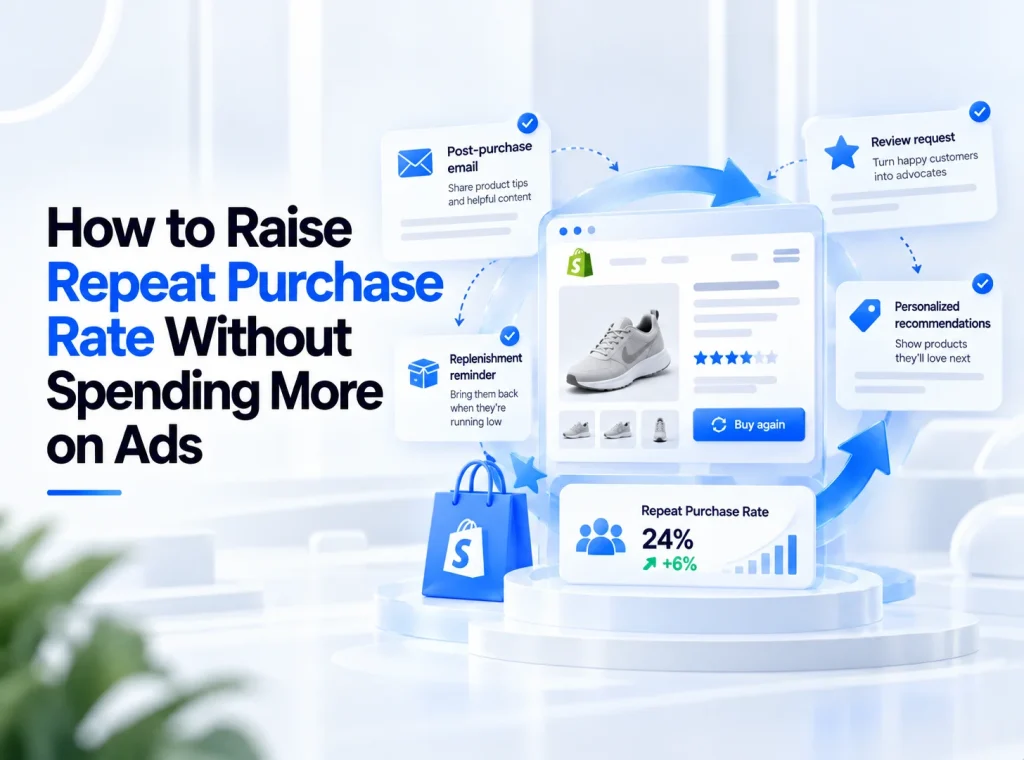
They may need help using the product. They may have questions you can answer before they contact support. A few days later, you might ask for a review. If the product needs replenishing, you can remind them when they are likely to be running low.
The timing should match what you sell.
A skincare customer may benefit from product education before receiving a replenishment reminder. A fashion customer may respond better to styling ideas or products that work with their previous purchase.
You can support this with post-purchase and retention-focused email flows that respond to customer behavior, from review requests to win-back campaigns.
Stop Sending the Same Message to Every Customer
A customer who placed their first order yesterday should not receive the same message as someone who has bought from you five times.
Purchase history gives you useful clues about what each customer may need next.
You can segment customers by:
- First-time and repeat buyers
- Product or category purchased
- Total customer value
- Typical reorder window
- Time since their last purchase
- Customers who have not returned after their first order
For example, someone who regularly buys a consumable product may need a simple reorder reminder. Someone who purchased a higher-priced item may respond better to useful accessories or product education.
Fix the First Experience Before Offering Another Discount
When repeat purchases are low, sending a discount can feel like the quickest fix.
But discounts cannot repair a poor first experience.
- Look at what happened before and after the first order.
- Were shipping costs clear?
- Did the product arrive when expected?
- Was the product easy to understand and use?
- Did your product page create the right expectations?
- Could customers get help easily if something went wrong?
Focusing too heavily on acquisition while neglecting retention is one of the ecommerce mistakes that can quietly make growth more expensive.
Make the Second Purchase One of Your Core Metrics
Email open rates and click rates are useful, but they do not tell you whether customers are actually returning.
Your retention reporting should go further.
If you are checking repeat customer rate in Shopify, Shopify calculates it based on customers who have purchased before compared with all customers who placed an order. Its customer reports can also help you understand how customer groups behave over time.
More importantly, look at what happens after the first order:
- How many customers make a second purchase?
- How long does it take them?
- Which products bring customers back most often?
- Which customer groups rarely return?
- Does customer lifetime value in ecommerce improve as repeat orders increase?
These numbers give you a much clearer picture of whether your retention strategy is working.
If acquisition is already bringing customers in but too few are coming back, it may be time to shift more attention toward email and retention instead of putting more budget into acquisition.
Frequently Asked Questions
What is a good repeat purchase rate for an ecommerce store?
A good repeat purchase rate depends on your product category, price, and buying cycle, so compare it against your own past performance and customer behavior.
How can I increase repeat purchases without offering discounts?
Improve your post-purchase experience, send useful follow-ups, recommend relevant products, and contact customers when they are most likely to need another purchase.
Why is my repeat purchase rate low?
Low repeat purchases can come from poor product fit, a weak customer experience, weak follow-up, long buying cycles, or a lack of compelling reasons to return.
How do post-purchase emails improve customer retention?
Post-purchase emails keep customers engaged after checkout by providing useful information, product recommendations, review requests, and timely reorder reminders.
Why does repeat purchase rate matter for customer lifetime value?
When customers buy more than once, they generate more revenue over time, which can increase customer lifetime value and reduce your dependence on constant new-customer acquisition.
You May Not Need More Traffic Yet
If new customers are already finding your store and placing orders, you may not need to increase ad spend first.
You may get more from your existing traffic by improving what happens after the first sale.
Better post-purchase communication, smarter segmentation, useful reorder reminders, and a stronger customer experience can all help improve repeat purchase rate without increasing your advertising budget.
Before trying to acquire more customers, check how many of your existing customers are actually coming back.
If retention is the weak point, start your next improvement there.
Get a growth audit from StoreHQ to see where your Shopify store is losing repeat revenue and which part of the customer journey needs attention first.

 8 min read