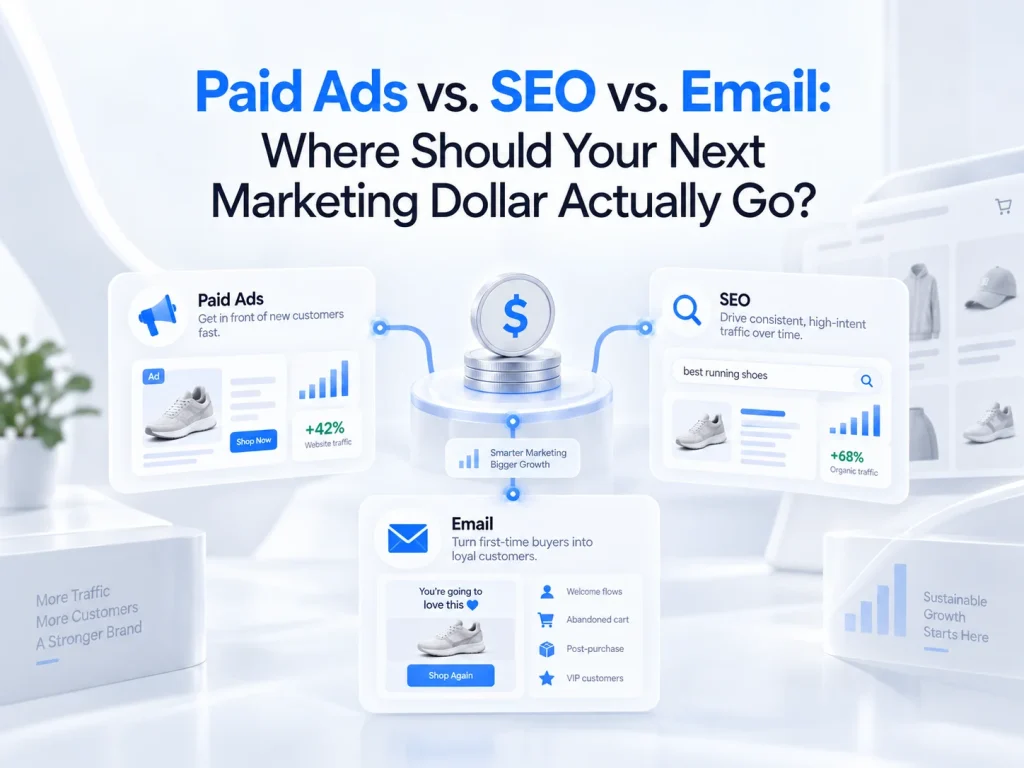
Your Shopify store is getting traffic. Paid campaigns are running. Email is bringing in some sales. SEO is starting to gain traction.
Then comes the harder question: where should the next chunk of your marketing budget actually go?
Putting more money into the wrong channel can leave you with more clicks, more activity, and very little extra revenue. Good marketing budget allocation for ecommerce starts with knowing which part of your growth system needs help most right now.
In this blog, you’ll learn when paid ads deserve more budget, when SEO is the smarter investment, when email should take priority, and how to decide which channel can make the biggest difference to your Shopify growth.
Paid Ads Make Sense When You Need More Qualified Traffic
Paid media can be one of the fastest ways to put your products in front of the right audience.
For a Shopify brand with a proven offer, a website that converts, and reliable tracking, increasing ad spend can help you reach more customers without waiting months for another channel to build momentum.
The problem starts when brands use paid ads to compensate for issues elsewhere.
If shoppers land on weak product pages, struggle through checkout, or do not understand why they should buy, more traffic simply sends more people into the same broken experience.
Once the fundamentals are working, better audience targeting, creative testing, and budget allocation can help you scale paid acquisition more efficiently instead of simply increasing spend.
Paid media is ready for more budget when:
- Your product pages are converting consistently.
- Your tracking and attribution are reliable.
- You know which products, audiences, and campaigns drive profitable orders.
- Your creative is being tested and refreshed regularly.
The goal is to buy traffic that can turn into profitable revenue.
SEO Makes Sense When Paid Traffic Is Doing Too Much of the Work
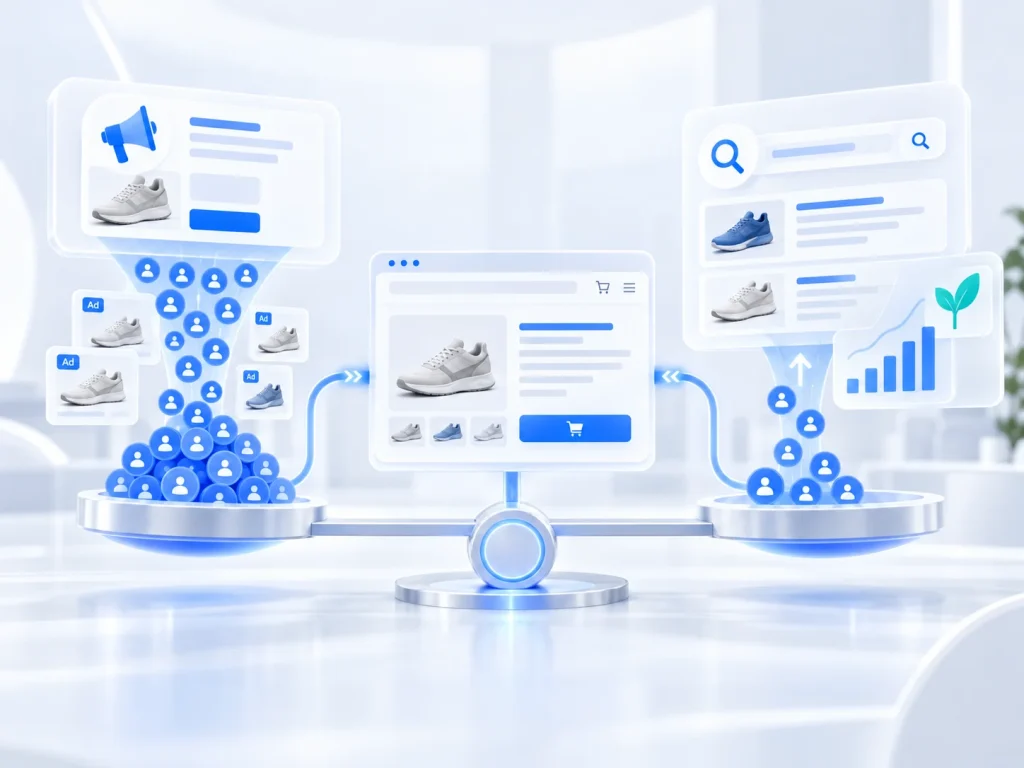
People think PPC is fast and SEO is slow. That is true, but not entirely.
Paid ads can generate demand as long as you continue funding them. SEO helps you build visibility that can keep bringing qualified shoppers to your store over time.
For ecommerce brands, that includes much more than publishing blog posts. Collection pages, product pages, technical SEO, internal linking, structured data, site speed, and search intent all influence how easily shoppers can find you.
When those pieces work together, organic search can become a scalable acquisition channel rather than just another source of traffic.
SEO may deserve more of the budget when:
- Organic traffic has stopped growing.
- Important product or collection pages have weak visibility.
- Most new customer acquisition depends on paid campaigns.
- Technical SEO issues are limiting rankings or discoverability.
Waiting until paid acquisition becomes too expensive is usually the wrong time to start building an organic channel.
Email Makes Sense When You Are Winning Customers but Not Keeping Them
Paid ads and SEO help shoppers discover your brand. Email helps you get more value from the customers and prospects you already worked to acquire.
That matters because a store can generate plenty of first-time orders and still struggle to grow.
If customers rarely return, the business has to keep replacing them with new buyers. That puts more pressure on acquisition and makes growth harder to maintain.
Email deserves closer attention when:
- Key flows such as welcome, abandoned cart, post-purchase, or win-back are weak.
- Repeat purchase rates are not improving.
- Most subscribers receive the same messages.
- Revenue depends heavily on constantly acquiring new customers.
So, Where Should Your Next Marketing Dollar Go?
There is no single winner in a marketing channel comparison between paid ads, SEO, and email.
The best channel depends on where the customer journey is breaking down.
If you are not getting enough qualified visitors, acquisition needs attention.
If traffic is healthy but sales are weak, putting more money into traffic may make little sense until conversion improves.
If traffic is healthy but sales are still weak, it may be time to fix the storefront issues hurting conversion before spending more on acquisition. Slow pages, unclear product information, poor mobile UX, and checkout friction can all reduce the value of traffic you are already paying for.
If customers are buying but rarely returning, retention may offer a better opportunity than another acquisition campaign.
This is the simplest way to think about where to spend a marketing budget for a Shopify store: put the next dollar where it can remove the biggest constraint.
Not where competitors are spending.
Not where the latest marketing trend says you should spend.
Where your own numbers show the biggest gap.
Frequently Asked Questions
Which marketing channel should ecommerce brands invest in first?
Start with the channel that solves your biggest current growth problem, whether that is traffic, conversion, or retention.
Is SEO better than paid ads for ecommerce?
Neither is always better; paid ads offer speed, while SEO can build more durable organic visibility over time.
How much should a Shopify store spend on paid ads?
There is no universal amount, so base spend on your margins, conversion performance, CAC, and ability to scale profitably.
When should an ecommerce brand invest more in email marketing?
Increase investment when you have customers and subscribers but weak repeat purchases, lifecycle flows, or segmentation.
Should SEO, paid ads, and email be managed separately?
They can have separate tactics, but budget decisions should consider how all three channels affect the same customer journey.
Put Your Next Marketing Dollar Where It Matters Most
Paid ads, SEO, and email can all drive growth, but the right investment depends on what your store needs now. Find the biggest gap first, then put your budget behind the channel most likely to improve it.
Not sure where your next dollar should go? Start a conversation and get a clearer view of what is holding your Shopify growth back.

 6 min read