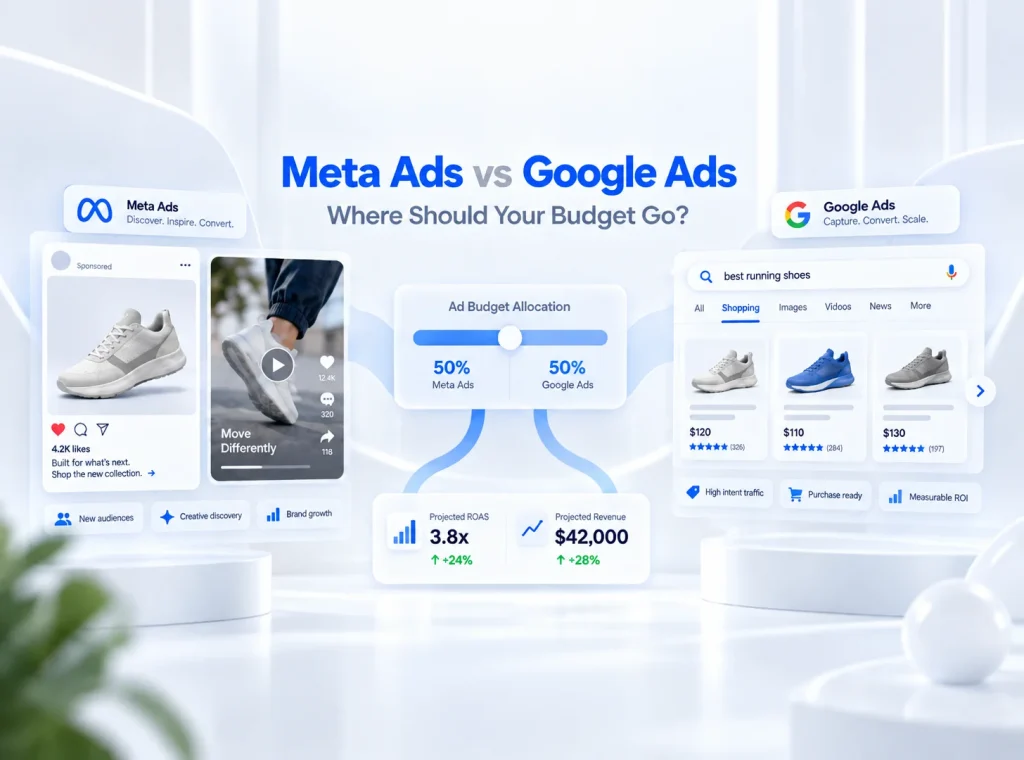
The expensive mistake is not choosing Meta over Google. It is paying one channel to do the other channel’s job.
A Shopify brand can waste money on Meta trying to capture demand that already exists, or pour budget into Google when hardly anyone is searching for the product yet. Both platforms can produce strong ROAS. Both can also look better in the dashboard than they really are.
The question is not which platform deserves more budget by default. It is what your next advertising dollar actually needs to accomplish.
In this blog, we’ll look at where Meta and Google earn their place, why ROAS alone can mislead you, and how to build an ecommerce ad channel mix around what your store needs.
Meta and Google Aren’t Competing for the Same Moment
“Meta creates demand. Google captures it.” Useful shorthand, but not the whole story.
Google Performance Max can run across Search, YouTube, Display, Discover, Gmail, and Maps, so Google is not limited to shoppers typing a query. Meta can also take someone from first exposure to retargeting and conversion.
The better way to think about paid social vs paid search is simple: what buying moment are you paying for?
Meta Earns Its Budget When People Aren’t Searching Yet
Some products already have people searching for them. Others need a little introduction before customers even realize they need them.
That is where Shopify Meta Ads can be useful.
A strong demo, creator-style video, unique use case, or simple visual hook can show the problem and solution in a single scroll. This is especially helpful for newer brands, unfamiliar products, or categories where customers need to see the value before they start searching for it.
But Meta still needs something that makes people stop. Better targeting and automation can help your ads reach the right audience, but they cannot turn a repetitive creative into something people want to watch. The product, the story, and the way you present it still matter.
Google Earns Its Budget When the Shopper Is Already Looking
Google becomes especially valuable when shoppers are already telling you what they want.
Someone searching for “women’s waterproof hiking boots size 8” is giving you a different signal from someone scrolling Instagram.
Shopping ads can show a product photo, title, price, store name, and other product information before the click. Google also relies on Merchant Center data, such as price and availability, making feed quality a key part of performance.
For brands running Google Shopping ads, ecommerce performance depends on more than bidding. Product data, pricing, imagery, landing pages, and competition all affect whether that intent turns into profitable traffic.
Intent helps. It does not guarantee profitability.
The Better ROAS Number Can Still Send You the Wrong Signal
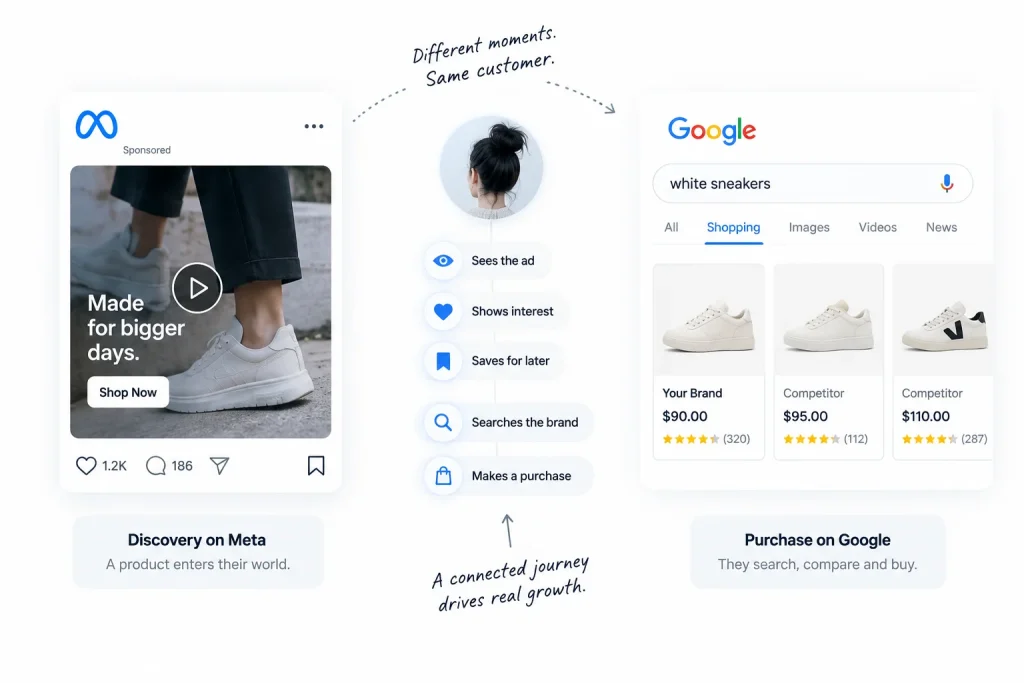
Imagine a Shopify brand sells a $90 product that looks great in a 15-second demo but has almost no category search volume.
Meta introduces it. People watch, click, save it, and move on.
A few weeks later, branded searches start climbing. Some of those shoppers search the product on Google, compare options, and buy.
Google may show the stronger ROAS. Did Google suddenly become the better channel?
Maybe. Or Meta helped create demand that Google later captured.
That is why attribution and contribution are not the same thing. Platform ROAS shows how a platform credits conversions. It does not automatically tell you where the next dollar will create the most incremental revenue.
You can see how that plays out in practice in this paid acquisition case study, where Meta, Google, creative testing, and funnel optimization all had to work together.
Before You Move Budget, Look at the Economics
A channel deserves more spend only if the economics support it.
Margins determine how much acquisition cost you can absorb. AOV affects how quickly the first purchase pays back. Repeat purchase rate and LTV change how much you can reasonably spend to acquire a customer.
Then look at the product.
- Is there meaningful search demand?
- Can it stop someone mid-scroll? Is the price competitive in Shopping?
- Do you have enough creative to keep Meta fresh?
- Is the feed strong enough for Google to understand what you sell?
Those answers matter more than somebody else’s “ideal” Meta-to-Google split.
Stop Splitting the Budget 50/50 by Default
Start with the problem, not the percentage.
Low search demand but strong creativity? Meta probably has more demand-generation work to do.
Strong commercial search demand? Google Search and Shopping may have more room, provided your margins, feed, and conversion rate support the cost.
Both channels working? Do not scale them equally just because both are profitable. Watch where additional spend starts to become less efficient and where the next dollar still has room to grow.
Neither working? Moving budget may not fix anything. The real bottleneck could be the offer, creative, pricing, product page, tracking, or checkout experience. If you are not sure where the problem sits, start by identifying whether your store has a traffic, conversion, or retention problem.
Your ecommerce ad channel mix should follow the bottleneck, not a preset ratio.
Frequently Asked Questions
Are Meta Ads or Google Ads better for Shopify stores?
Neither is universally better; the right channel depends on demand, product economics, creative strength, and the job your budget needs to do.
Should a new Shopify brand start with Meta or Google Ads?
Start where the strongest opportunity exists: Meta when demand needs to be created, or Google when meaningful purchase-intent search demand already exists.
Are Google Shopping ads better than Meta Ads for ecommerce?
Google Shopping can capture existing product intent, while Meta can create interest before the shopper starts searching.
How should ecommerce brands split Meta and Google ad budgets?
Base the split on marginal efficiency, profitability, available demand, creative capacity, and each channel’s role in the buying journey rather than a fixed percentage.
The Budget Should Follow the Bottleneck
Meta and Google are not competing to do exactly the same job. One Shopify brand may need more demand creation. Another may already have demand and need to capture it more efficiently. Many growing brands eventually use some combination of both.
The important part is knowing what you are paying each channel to solve. Get a growth audit with StoreHQ to see where your acquisition budget is creating growth and where it may be working harder than it needs to.

 6 min read